Personal exploration · Transportation design · 2026
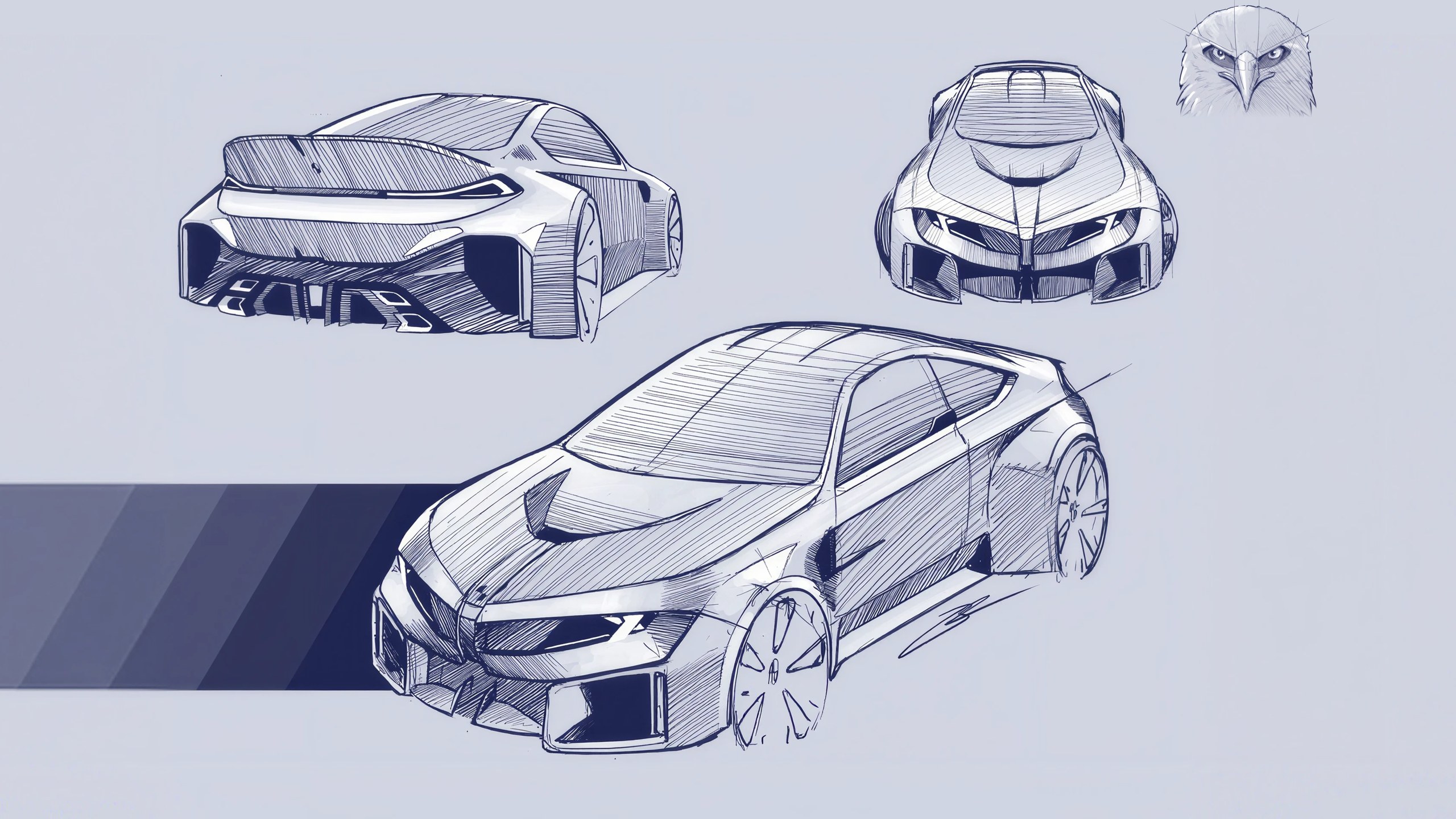
Take the design language of the BMW M Concept Neue Klasse, itself rooted in the E30 M3, and ask what the next M2 could be. Exterior, interior and HMI screens, from the first pencil line to renders driven by my own sketches.
Radical, brutal, raw power.
Lately I've been inspired by the brilliant work on the recent BMW M Concept Neue Klasse, designed under the direction of Oliver Heilmer and rooted in the E30 M3. I thought there was a way to bring that language into what the next M2 could be: take the legacy of the F87 and G87 generations and push it to a new level.
 The DNA
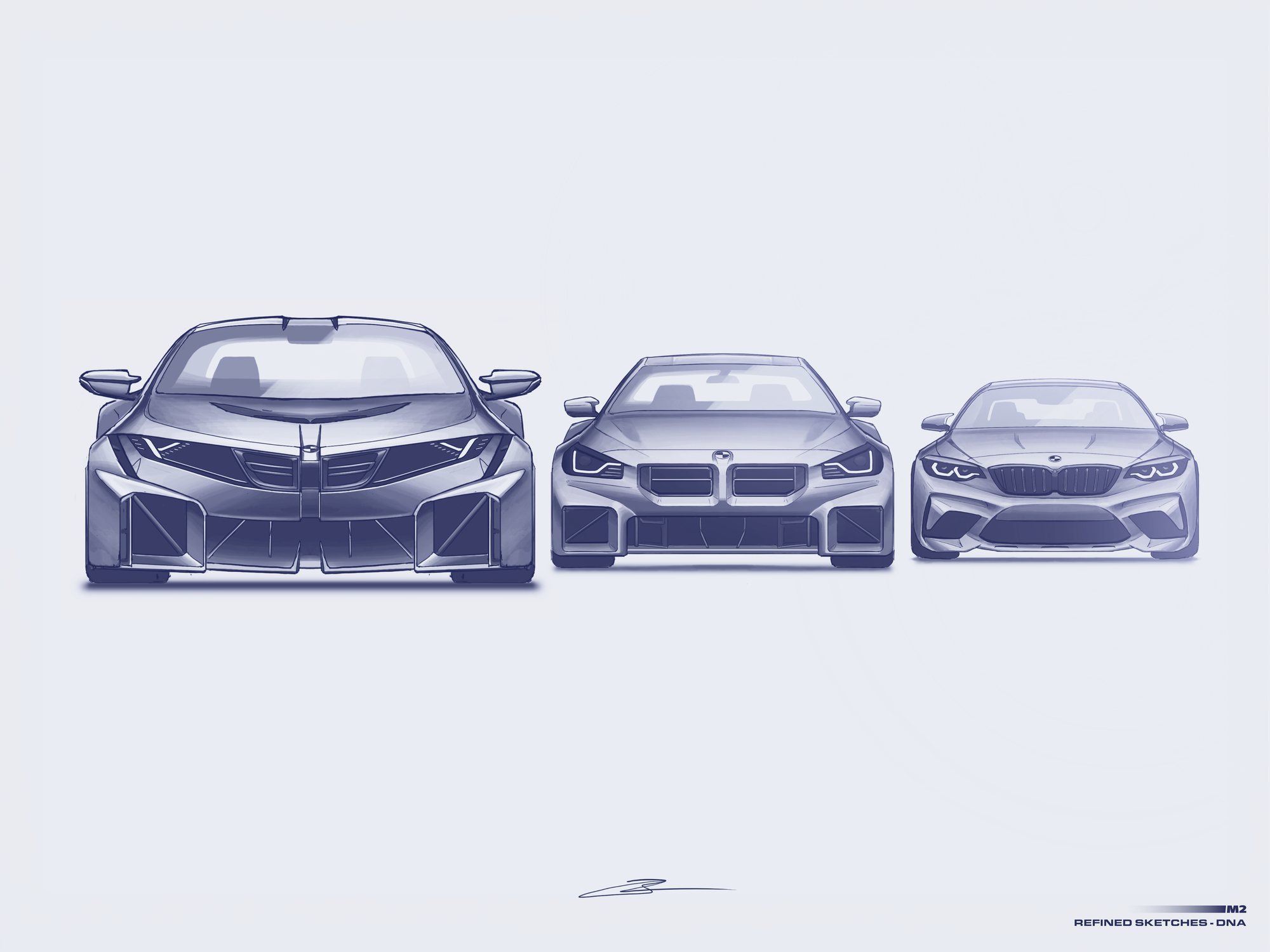
The DNA plate: the concept next to the G87 and the F87 it descends from.
 Inspiration · BMW M Concept Neue Klasse
 Heritage · 1989 M3 (E30)
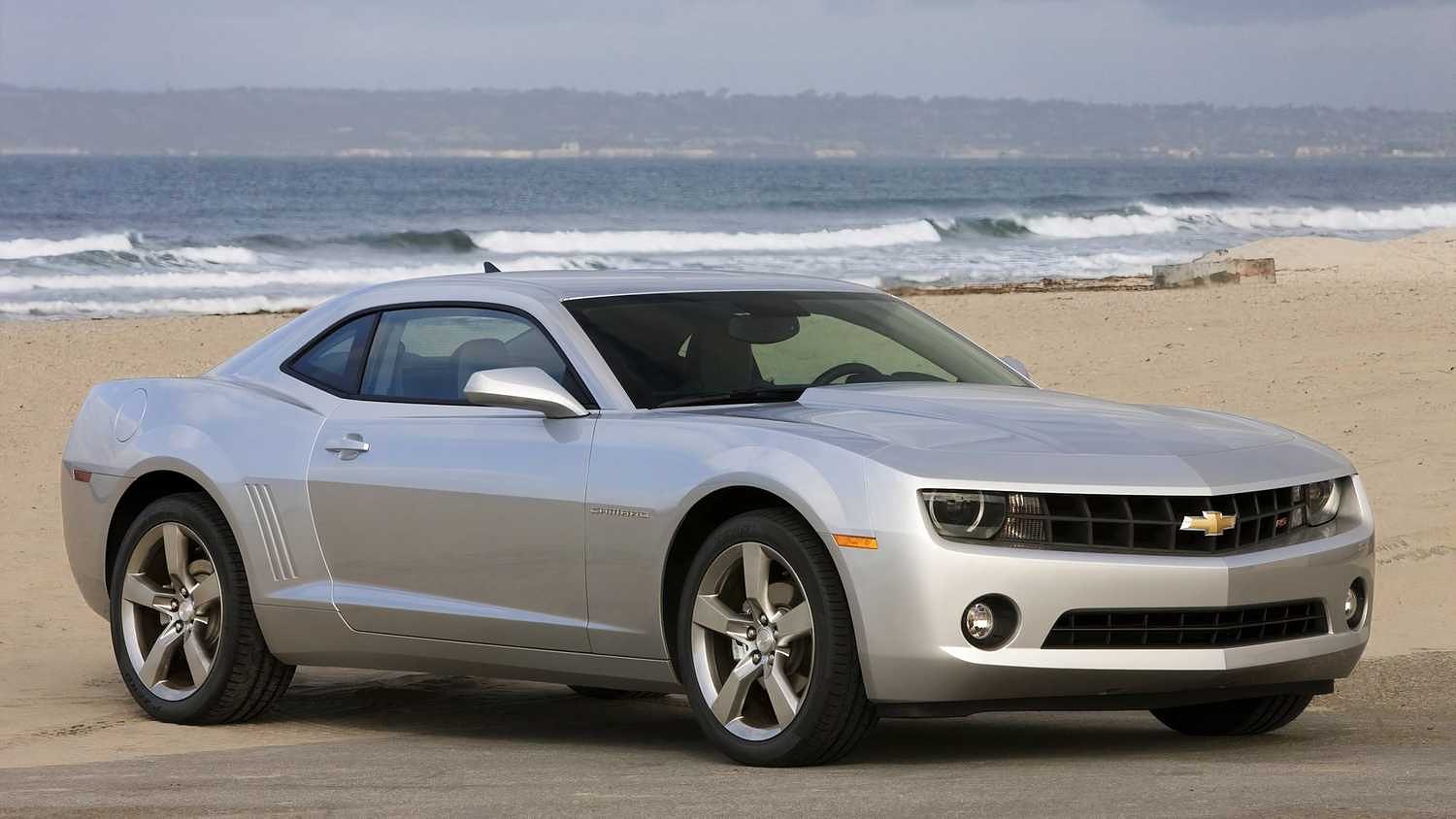 Muscle-car influence
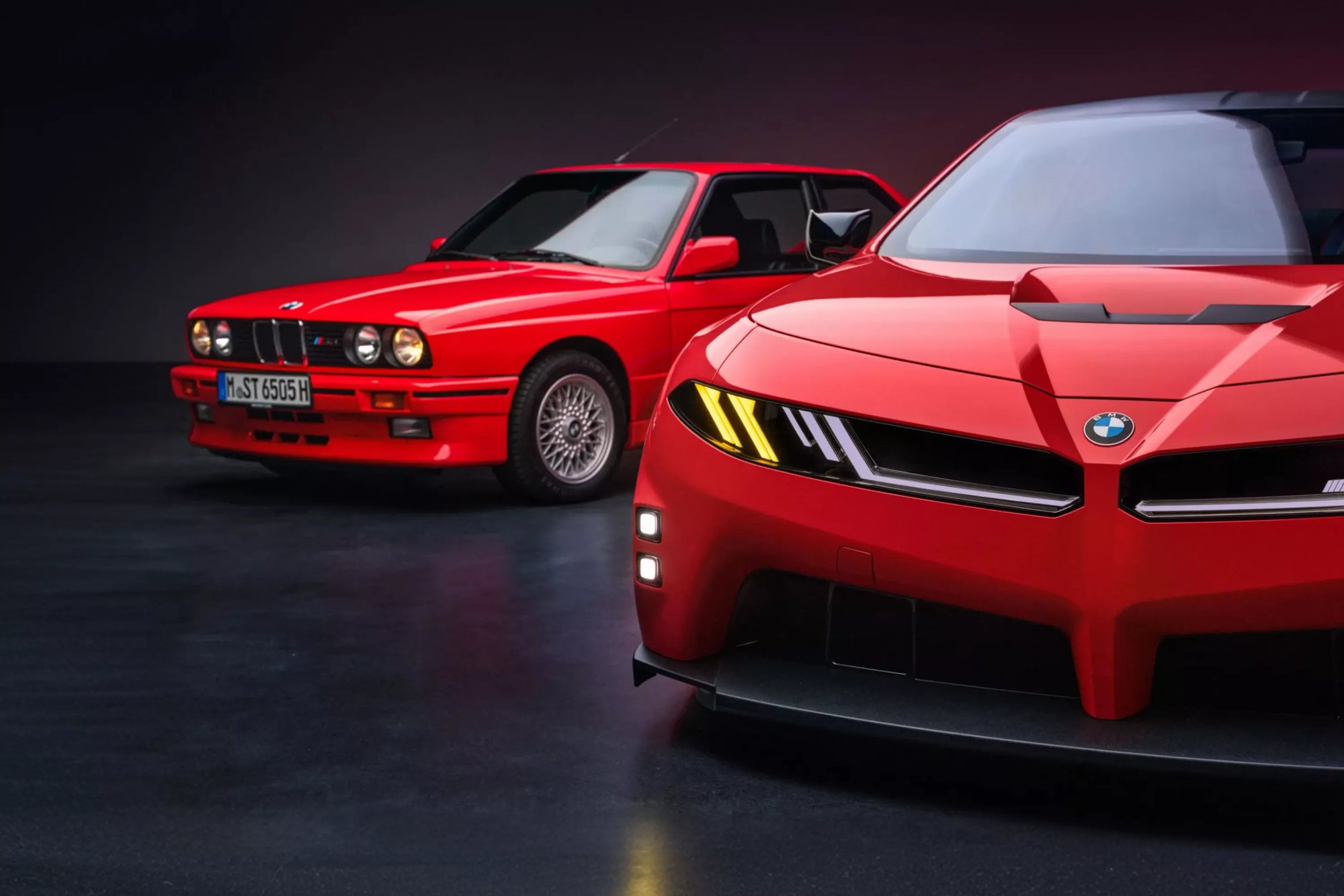
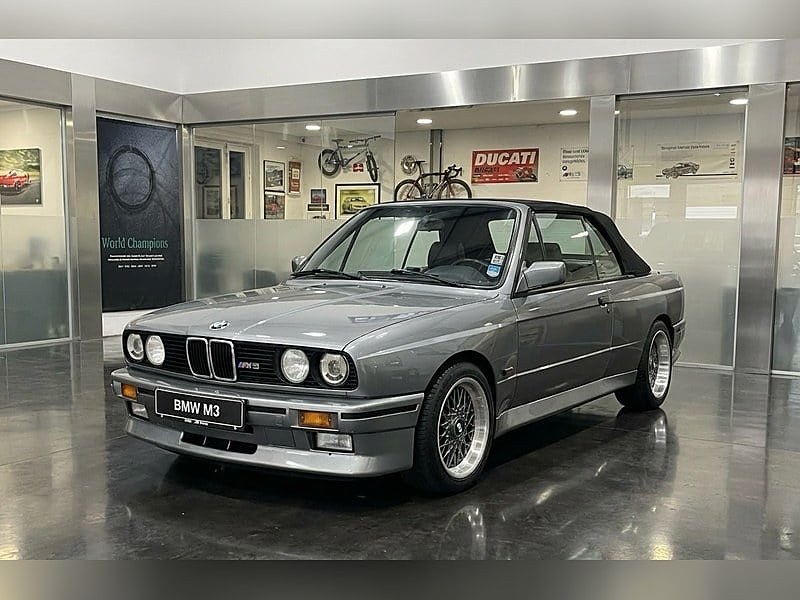
Left, the BMW M Concept Neue Klasse, shown by BMW with the E30 M3 it draws from, designed under Oliver Heilmer: the starting point of this exploration. Centre, the 1989 M3 (E30): the box flares and the four-eyed face the concept looks back to. Right, the 2011 Camaro: the pointed nose and the muscle, the cue for the stance. Photos: BMW, Car & Classic, CarBuzz.
AI in the process, without losing the hand.
This was also the occasion to sharpen my design workflow. I brought AI into the process in a way that stays true to what I sketched and to my intentions: it was mostly used to render faster and to ideate faster, and that sharpens decisions sooner. Every render on this page starts from one of my own sketches.
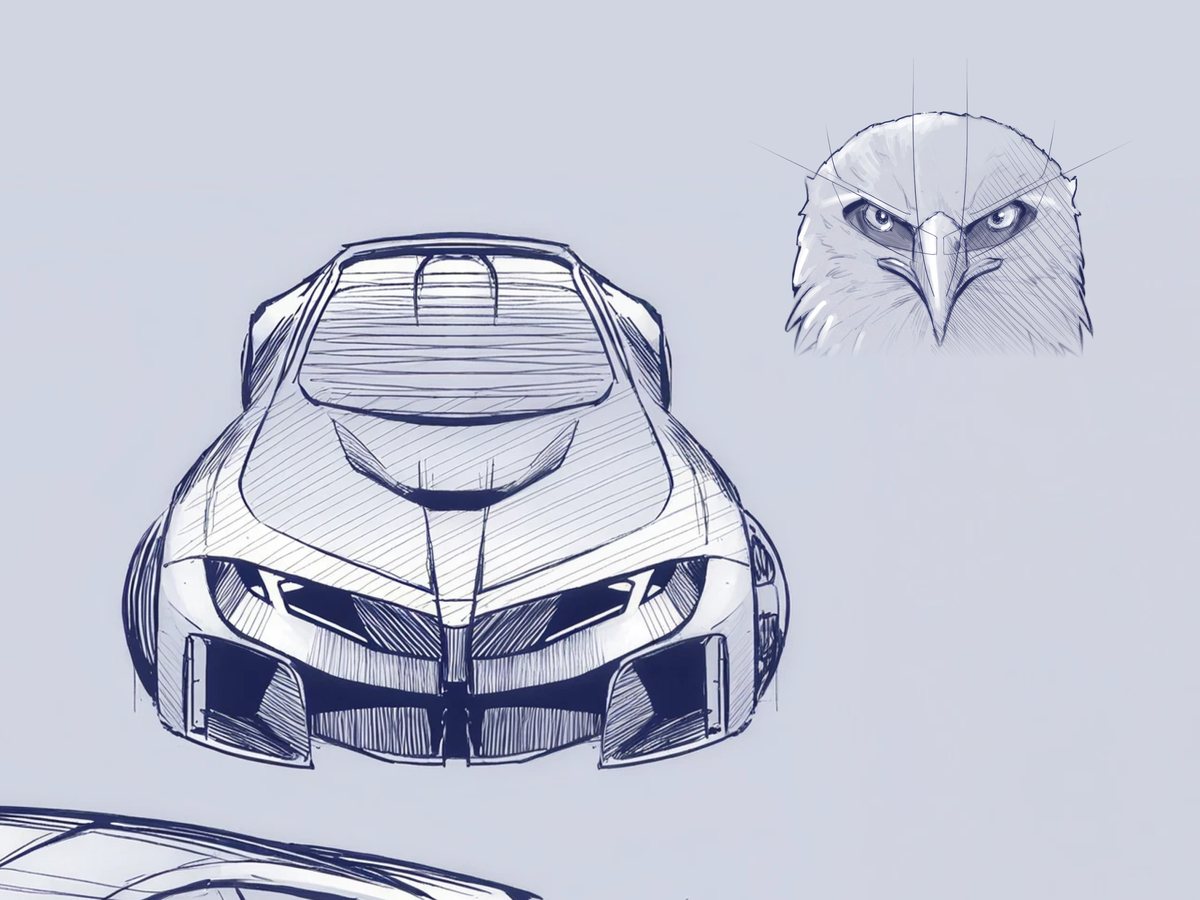 01 · SketchThe hand firstLoose pencil sketches, the intention and the proportions.
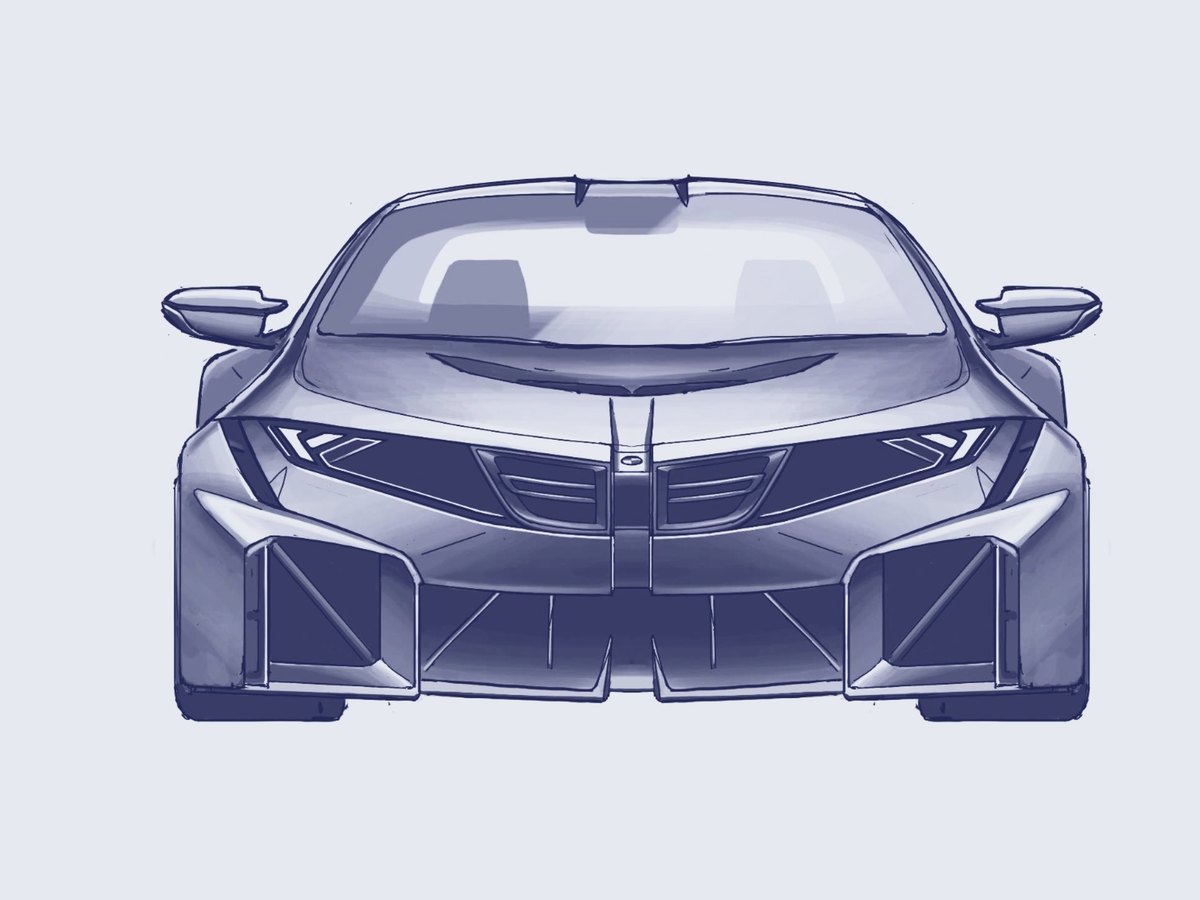 02 · RefineDecideRefined sketches, the volumes and the details settled by hand.
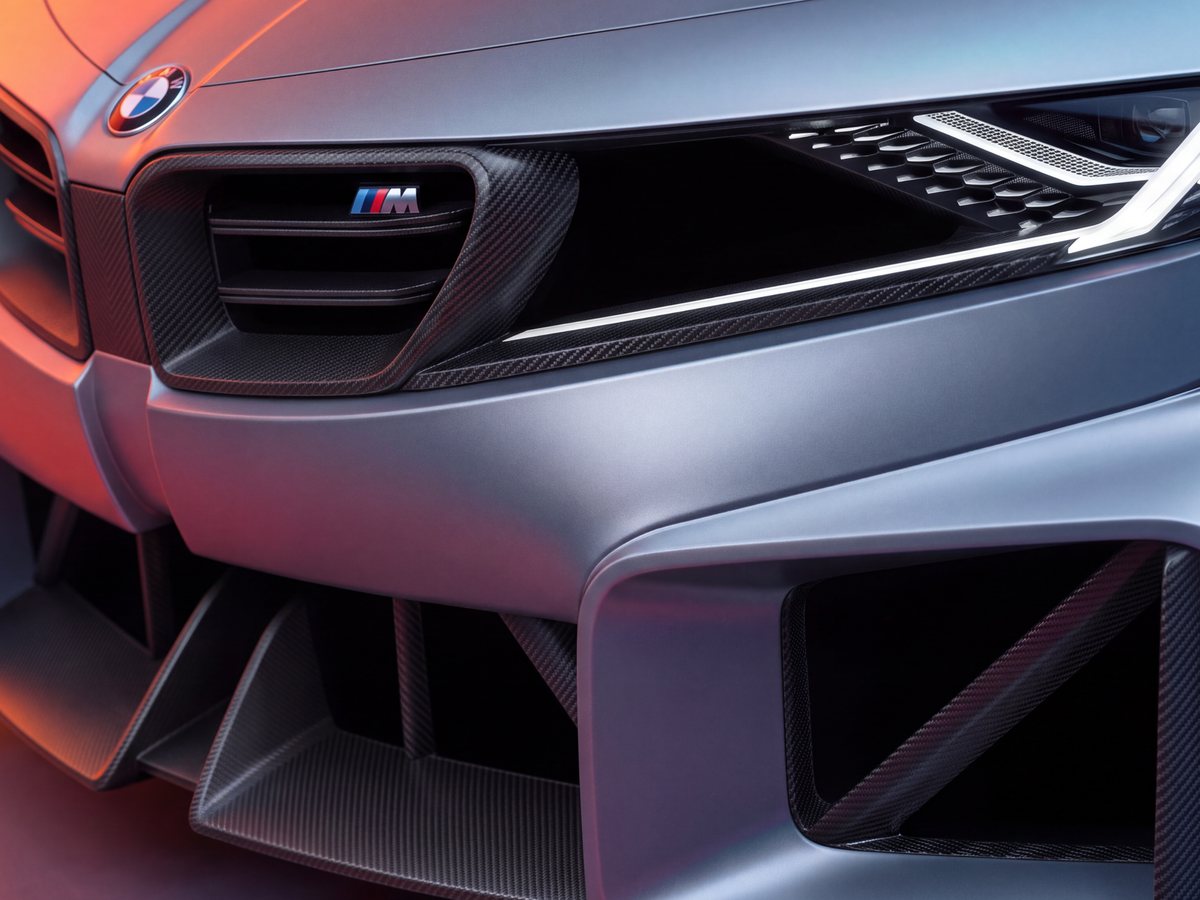 03 · Sketch × AI renderRenderAI renders the drawing faster, and the drawing stays the brief.
Strong muscle proportions. The Neue Klasse comes in almost surgically, and the kidney grille takes its cue from the E generations. Right from the initial sketch, the face came out eagle-like: I wanted a less square design than the G87, while keeping, capturing and evolving its presence.
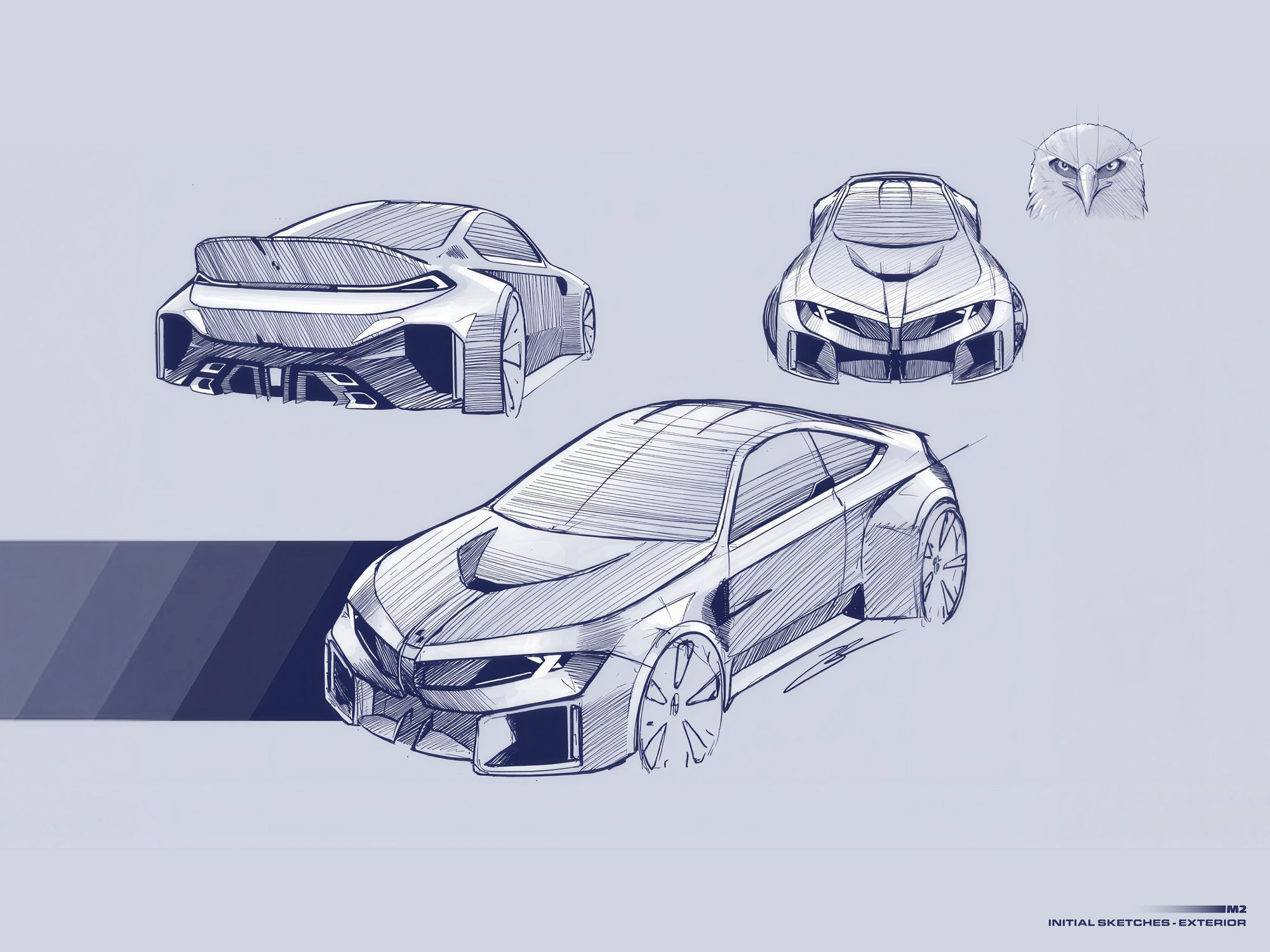 Initial sketches
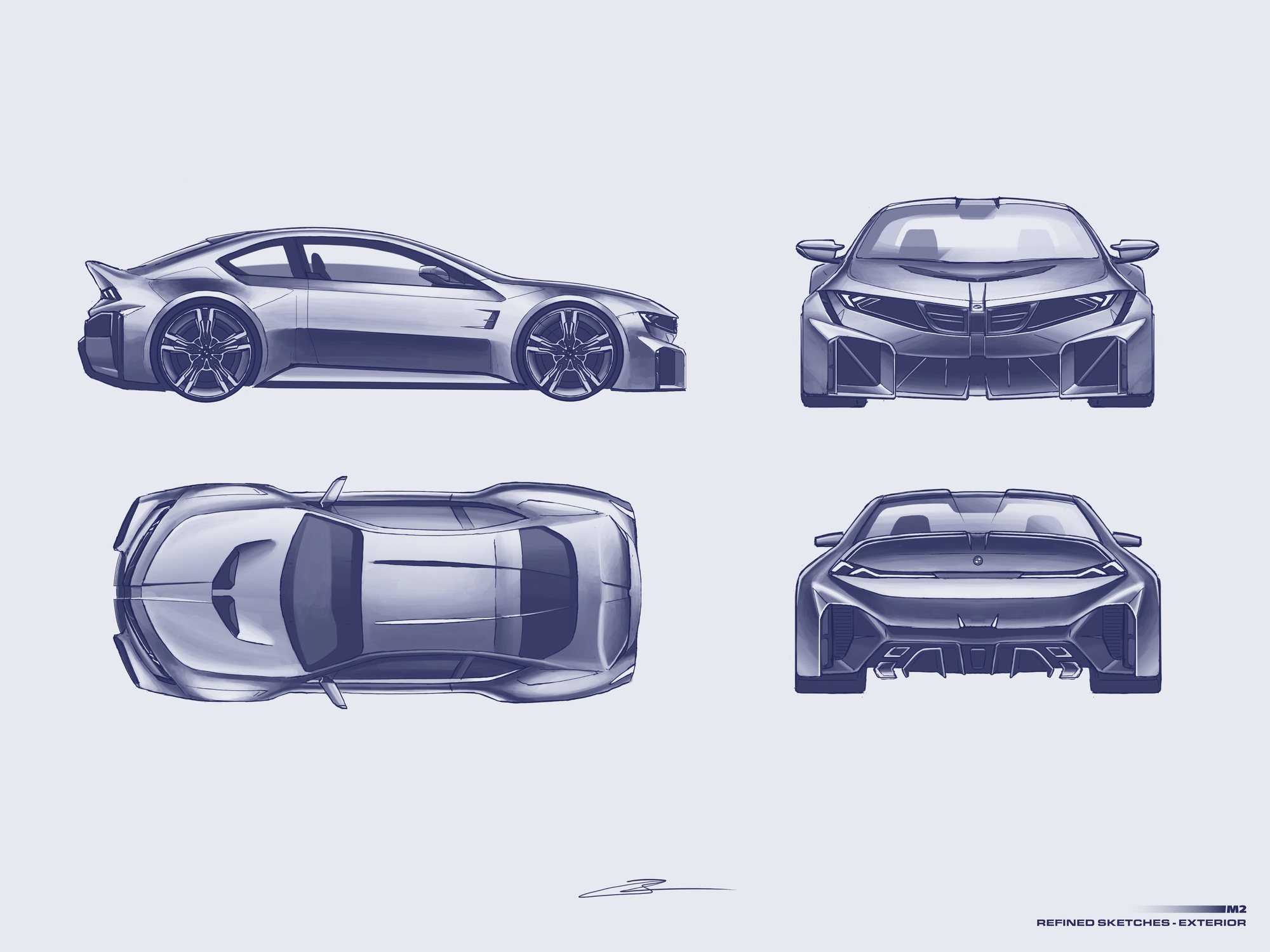 Refined sketches
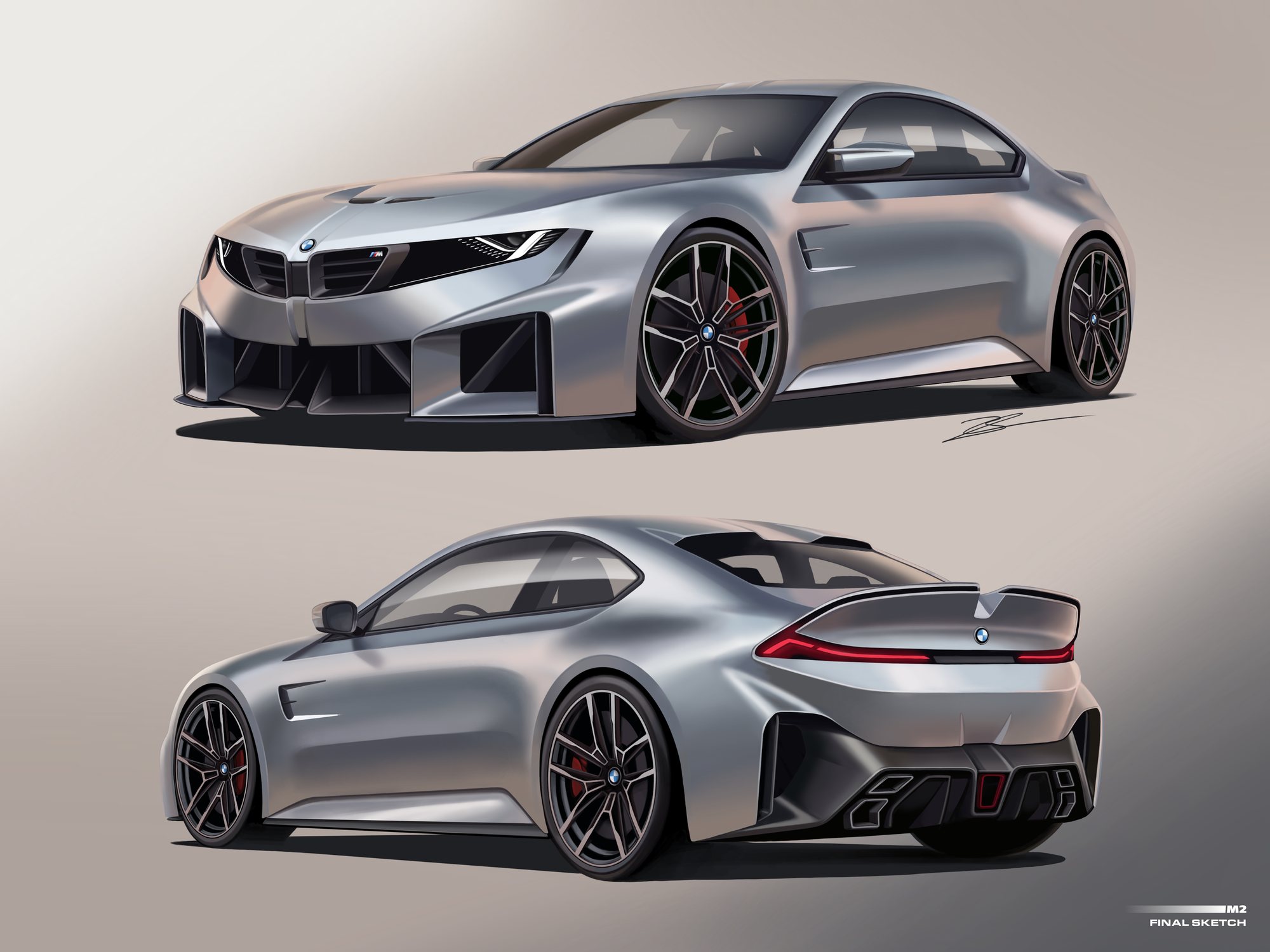 Final sketch
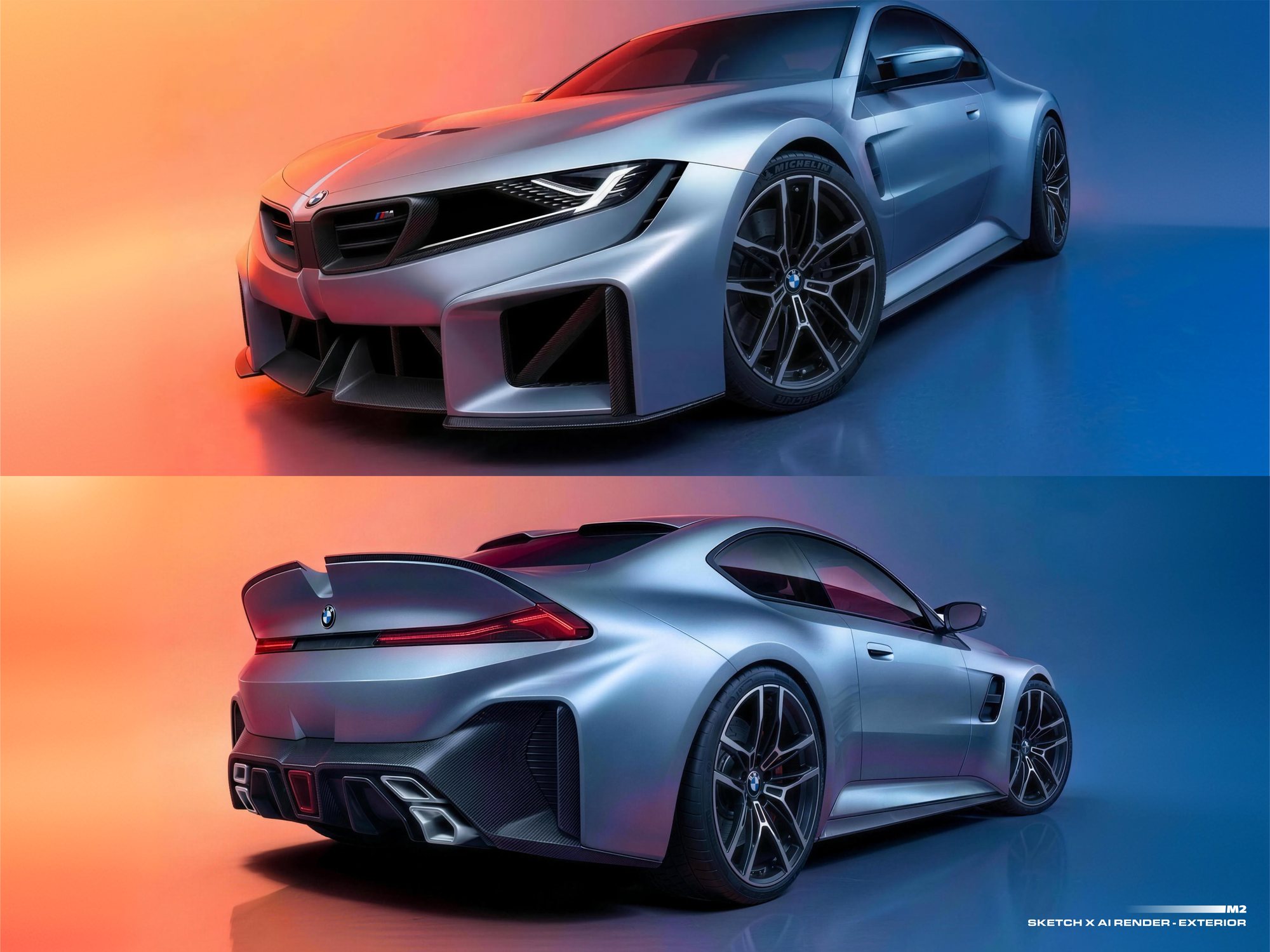 Sketch × AI render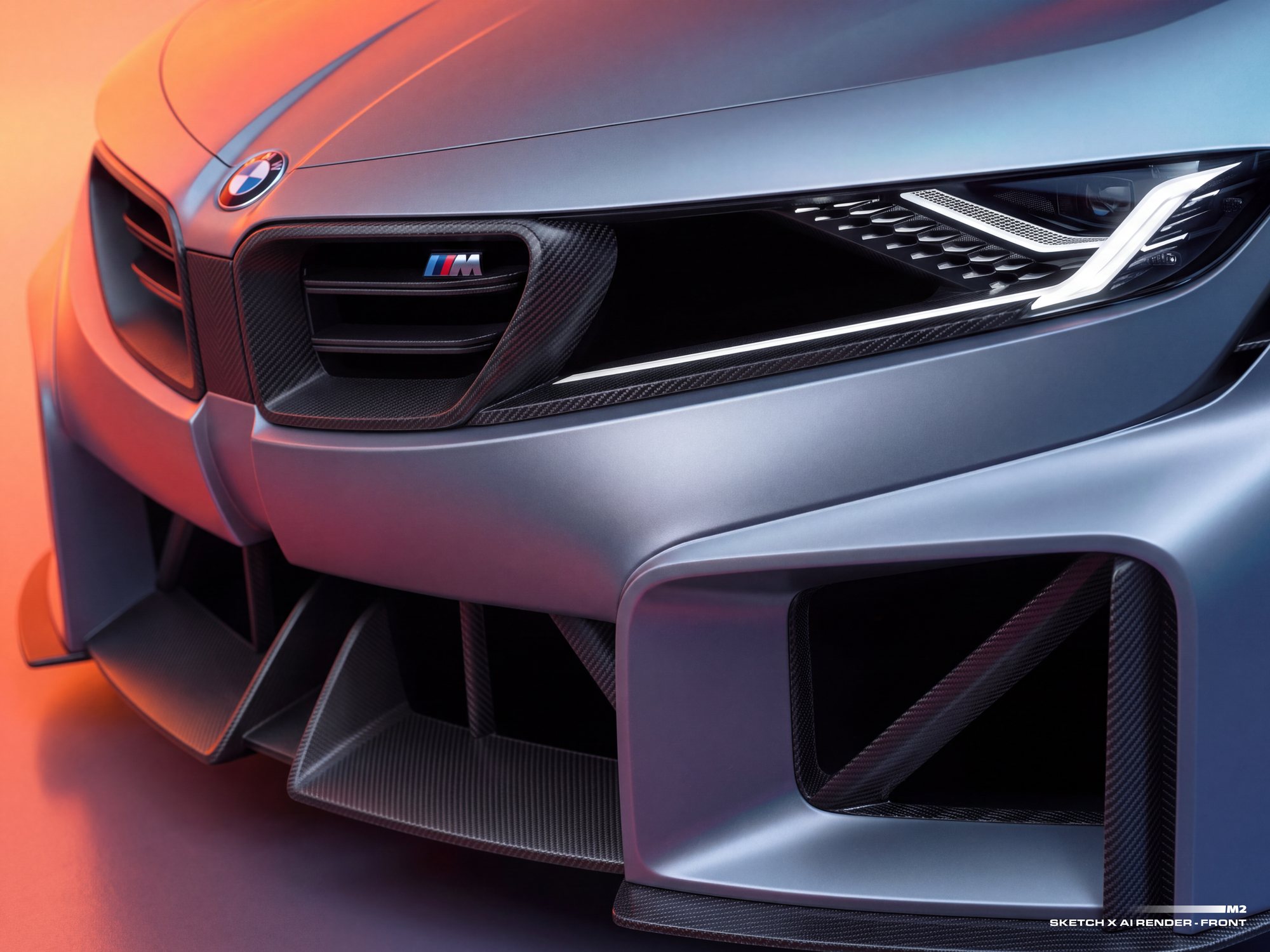
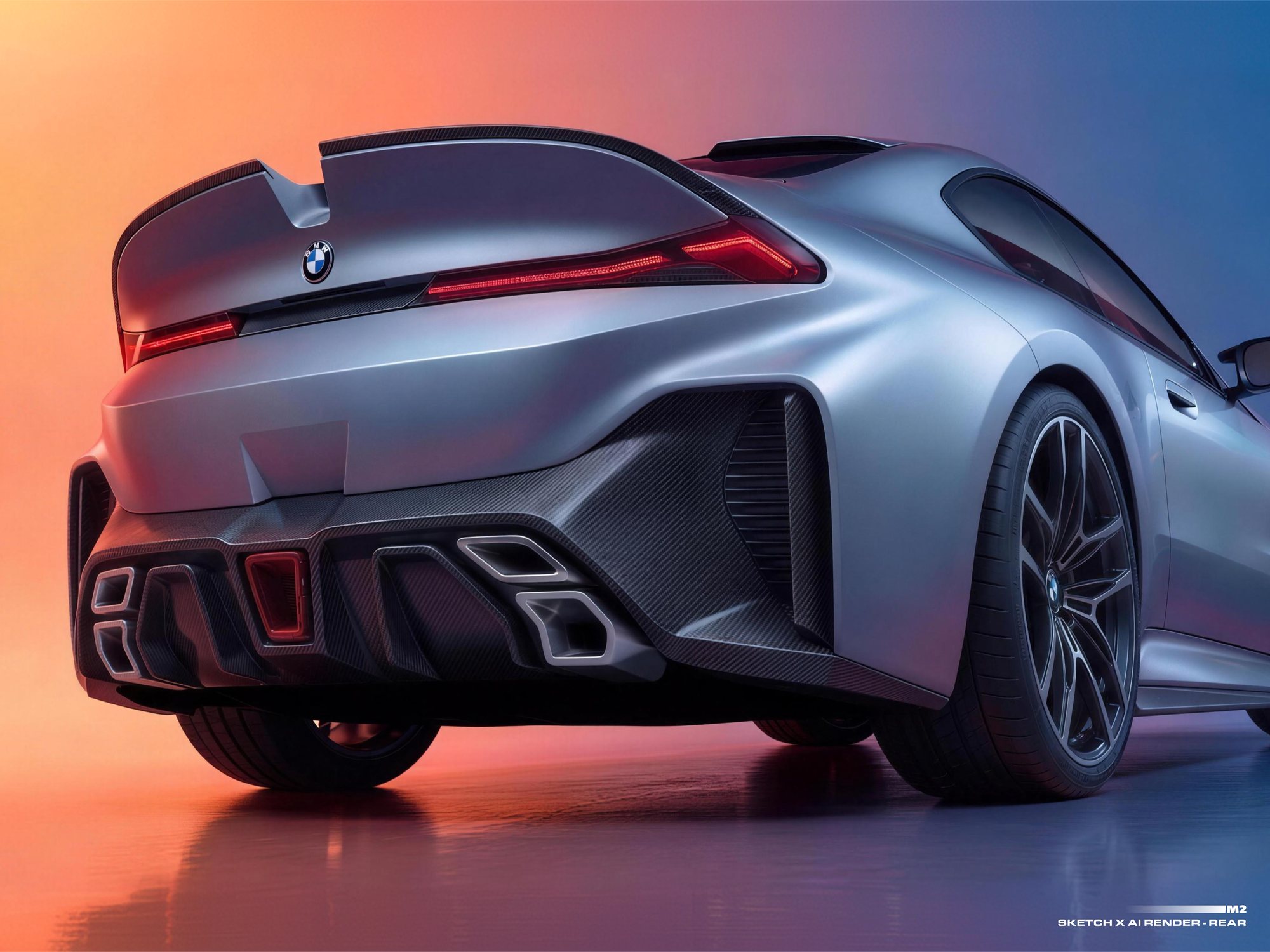
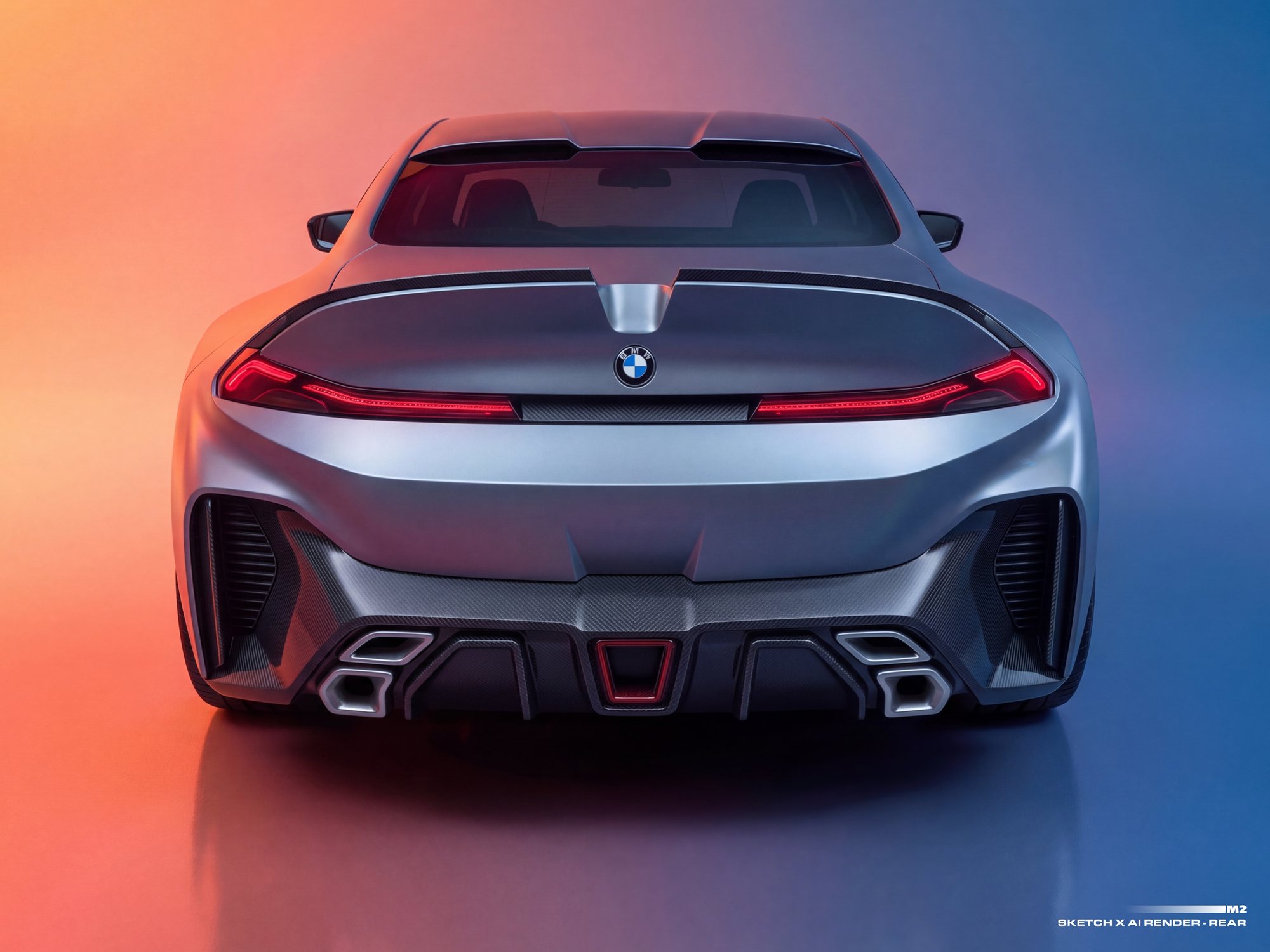
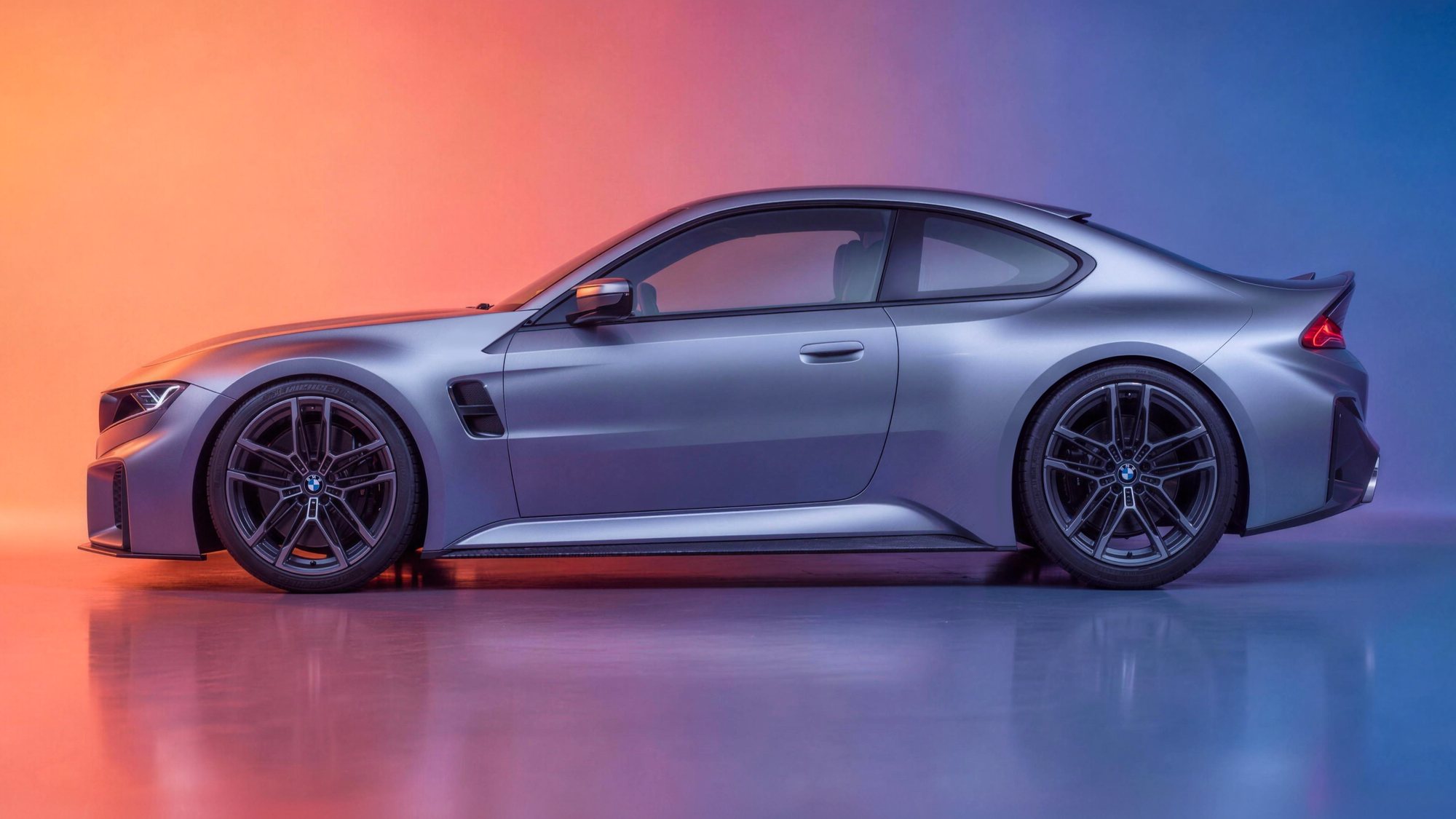
*Sketch × AI render: every render starts from my own final sketch, AI handled the rendering pass.
The centre of the dashboard is designed asymmetrically, turned towards the driver. In UX terms it was clear from the start: the main driving information sits behind the wheel; contextual, non-essential information for the driver and the passenger lives on the panoramic screen, taken directly from the Neue Klasse; the centre console carries the vehicle's secondary controls. The section of the panoramic screen above the steering wheel works like a head-up display.
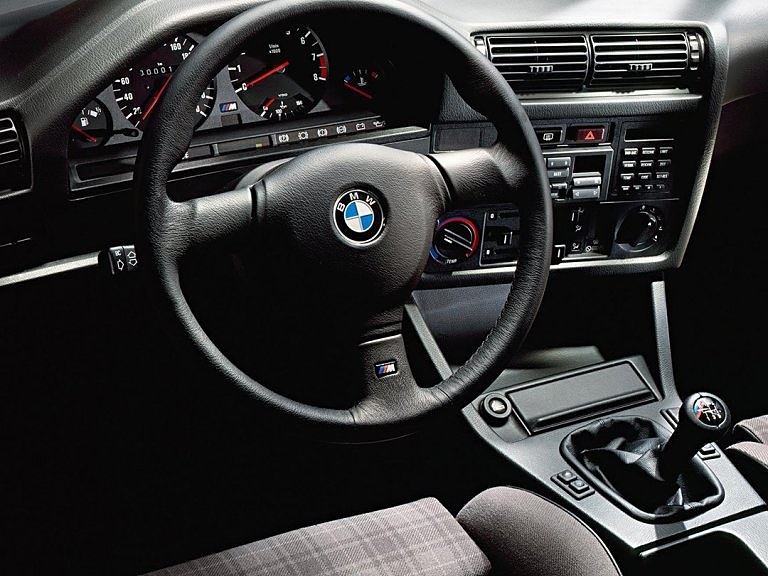 Inspiration · E30 M3 cockpit
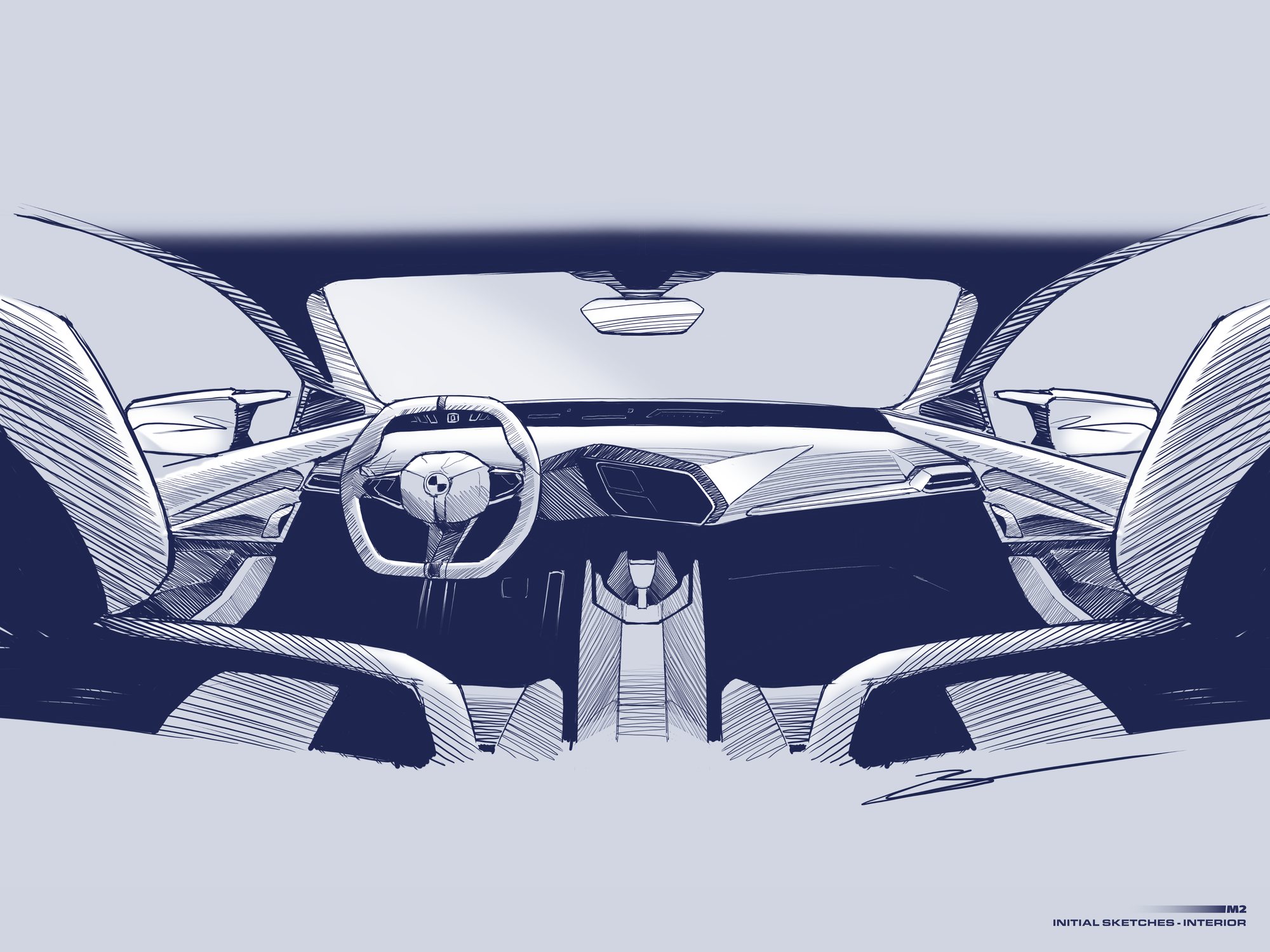 Initial sketch
Left, the E30 M3 cockpit: the centre console already angled towards the driver, the reference for the asymmetry. Right, the first sketch of the dashboard. E30 photo: Downshift.
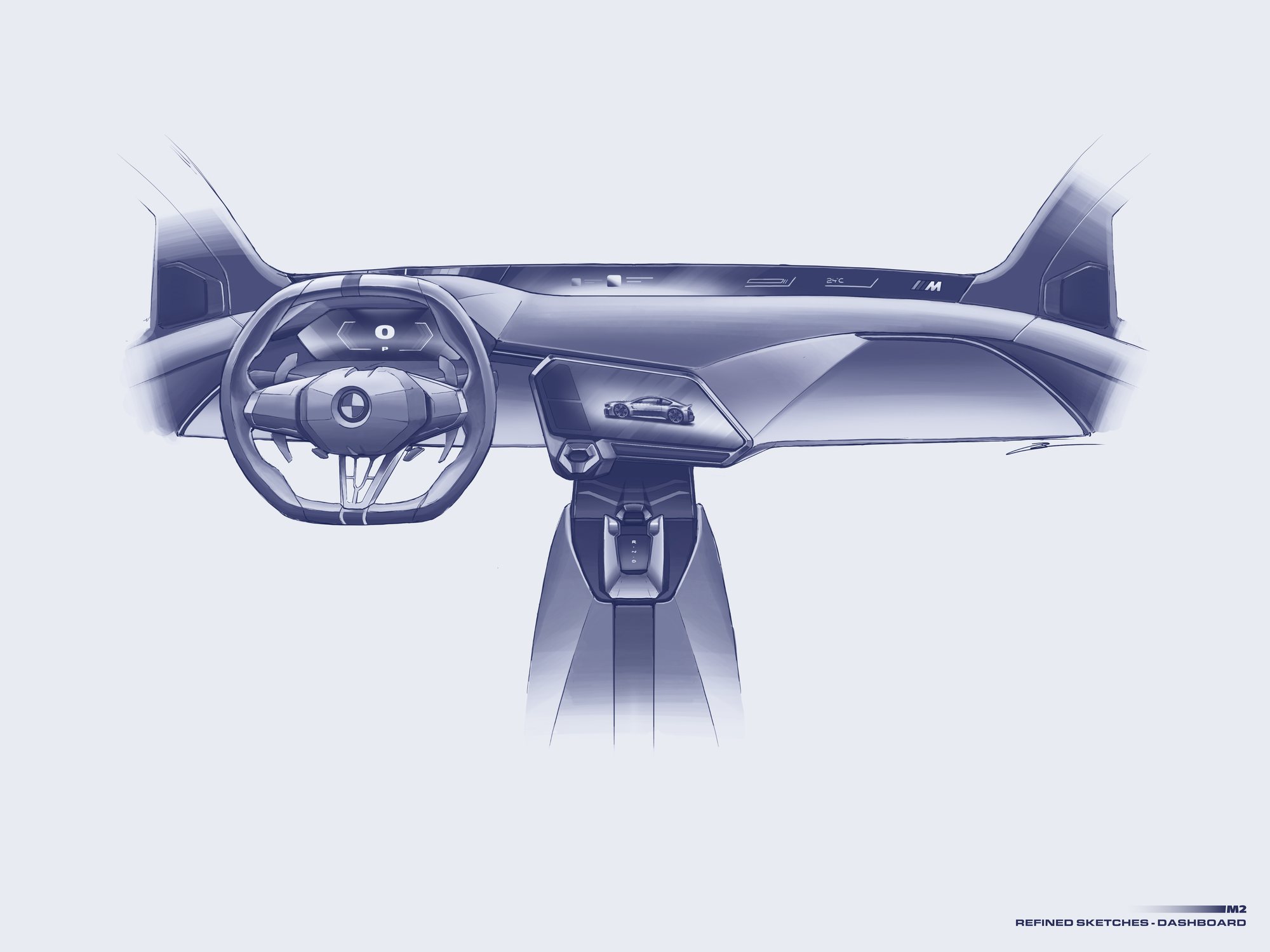 Refined sketch
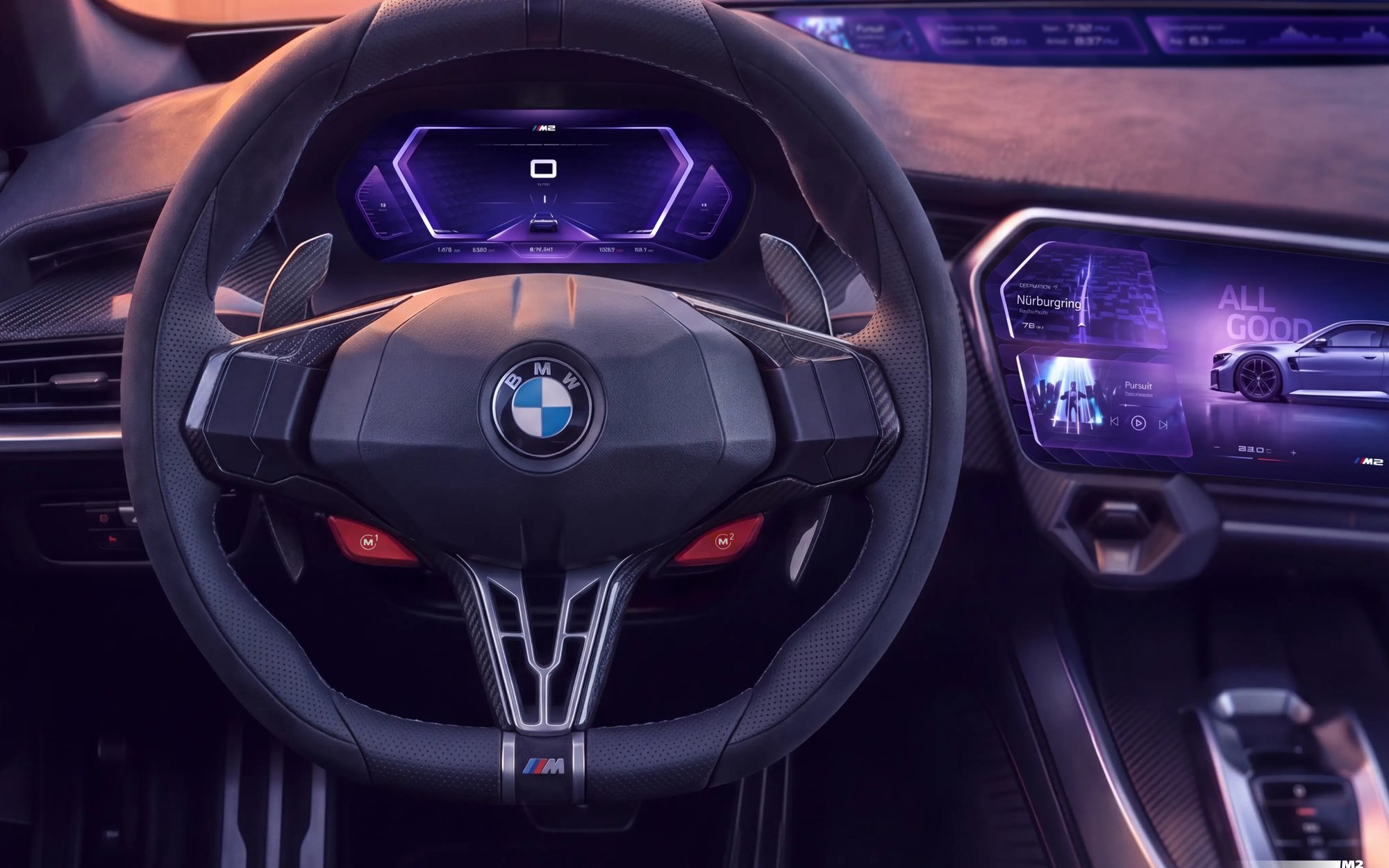 Sketch × AI render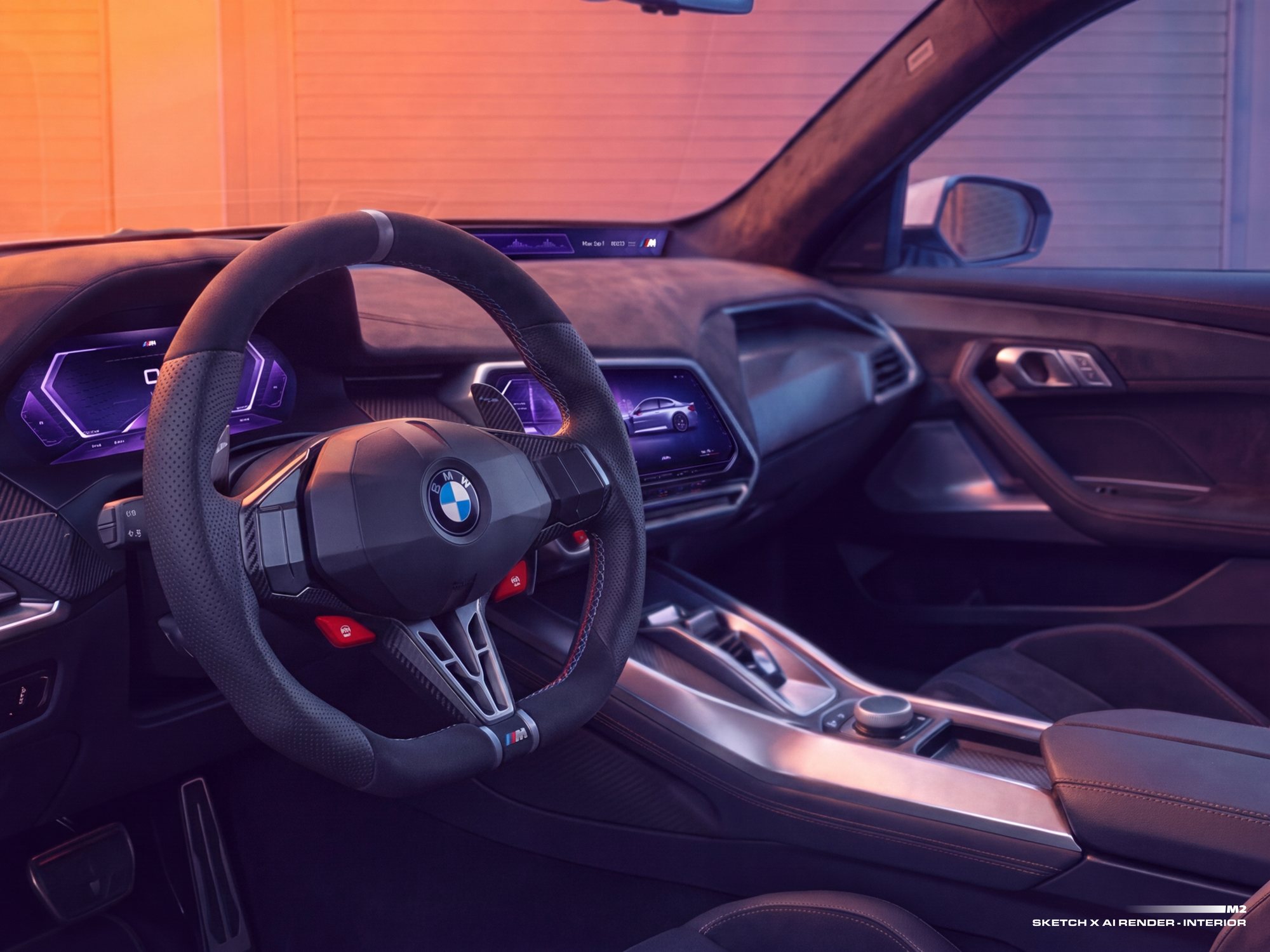
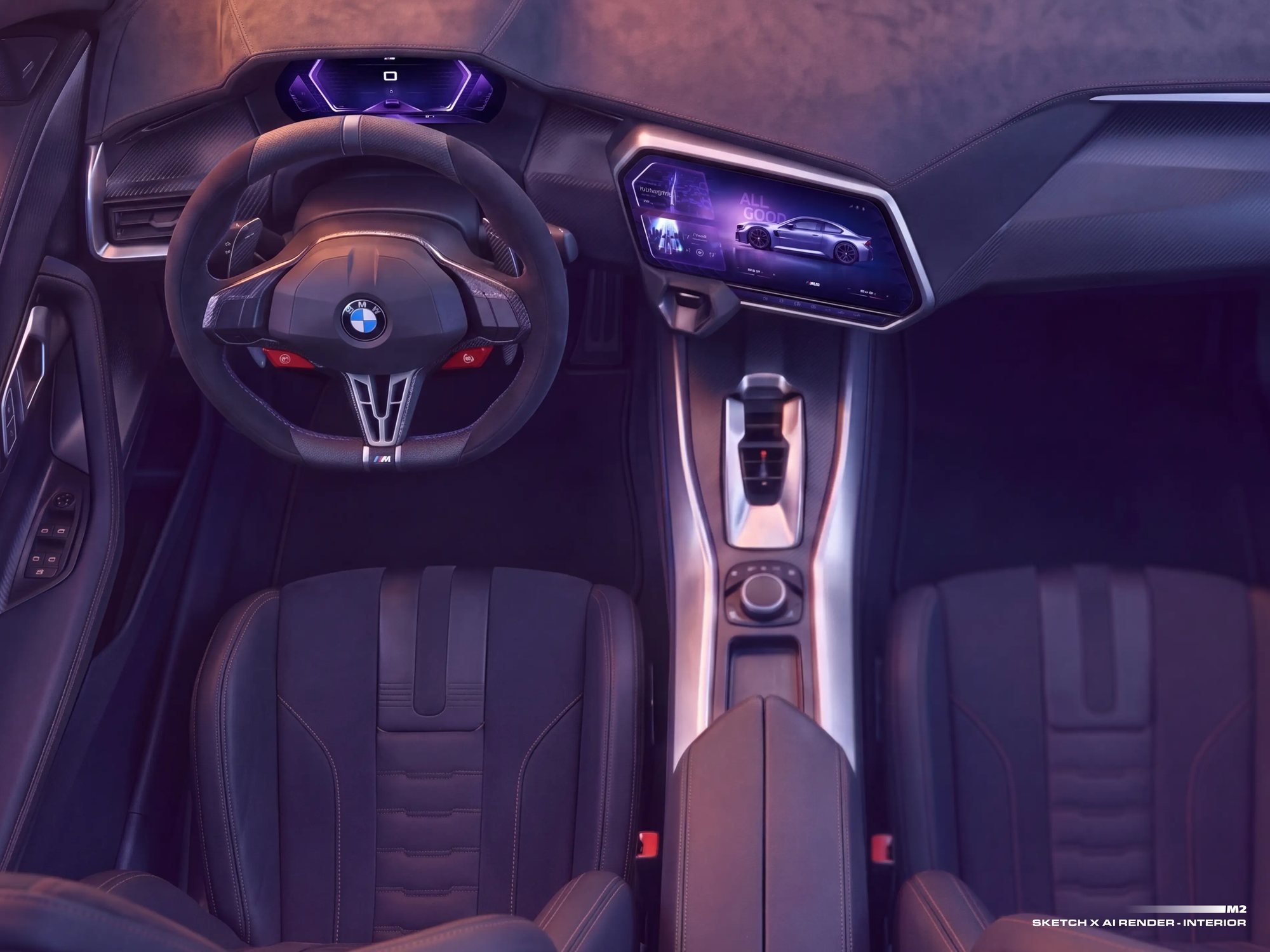
I had many ideas for the wheel, and I kept the safe option that best suited the style of the exterior, with the M1 and M2 shortcut buttons relocated.
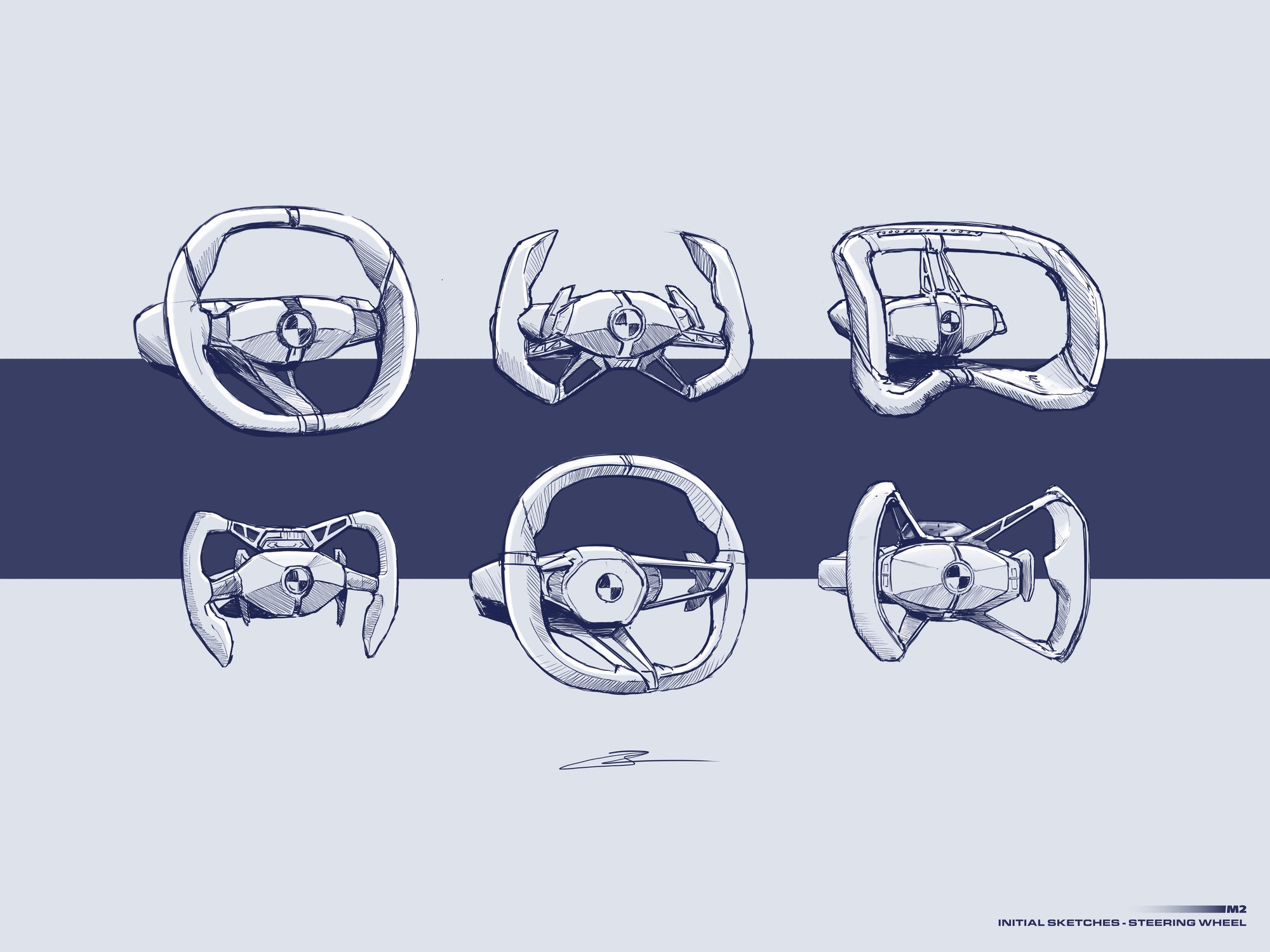 Initial sketches
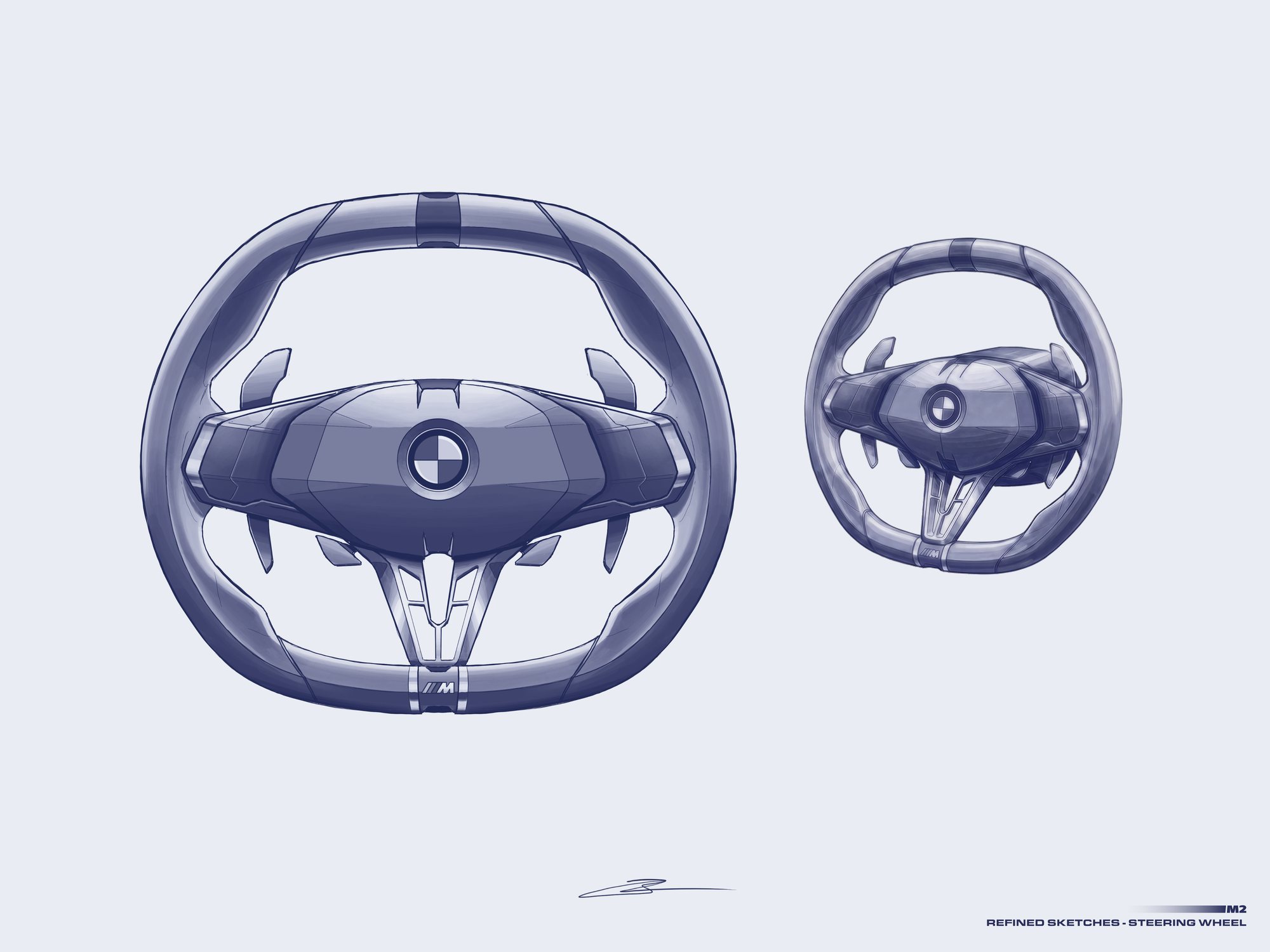 Refined sketches
The bucket seat gets a special treatment to fit the overall look and feel, while staying close to the M design identity.
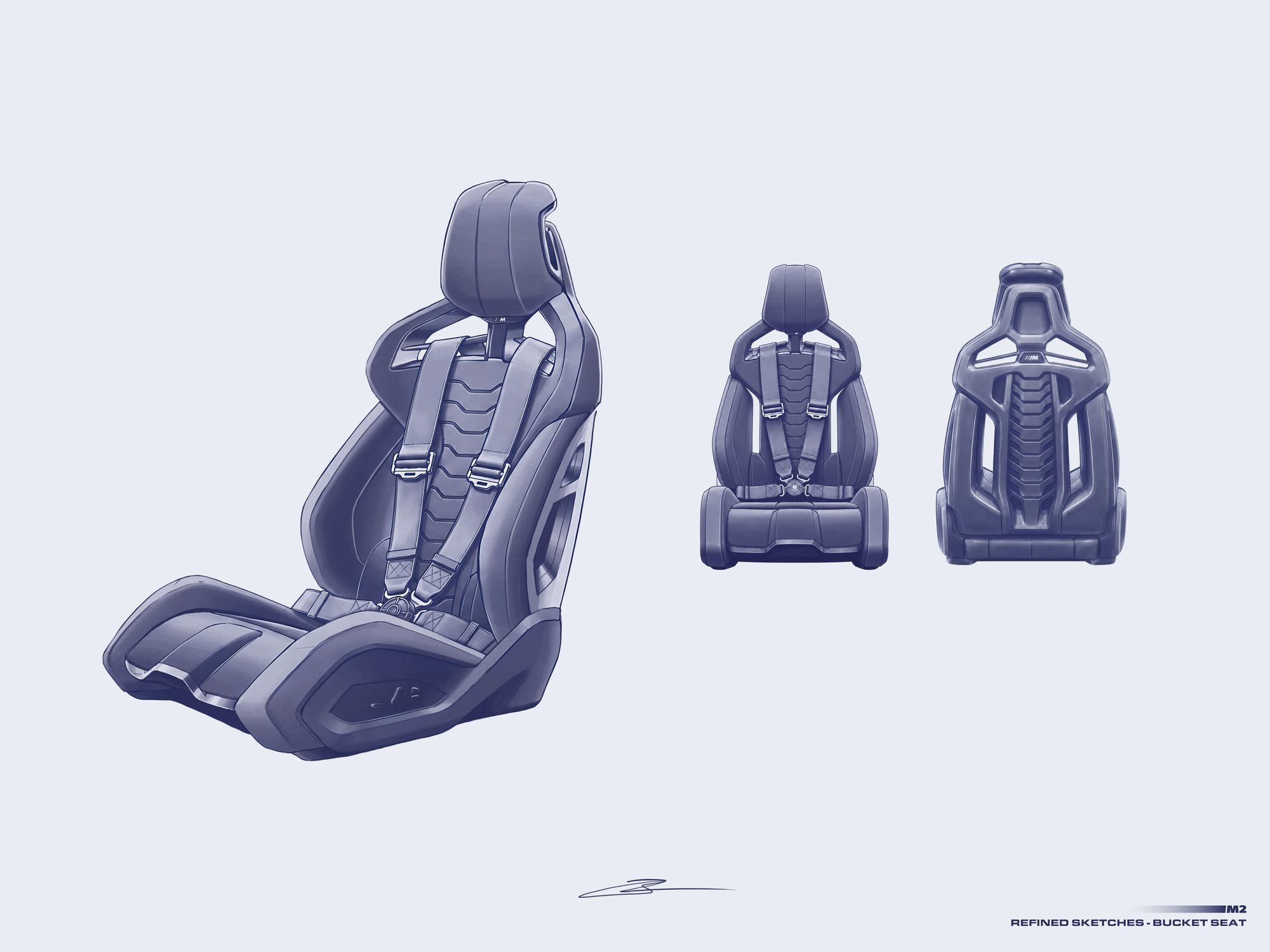 Refined sketches
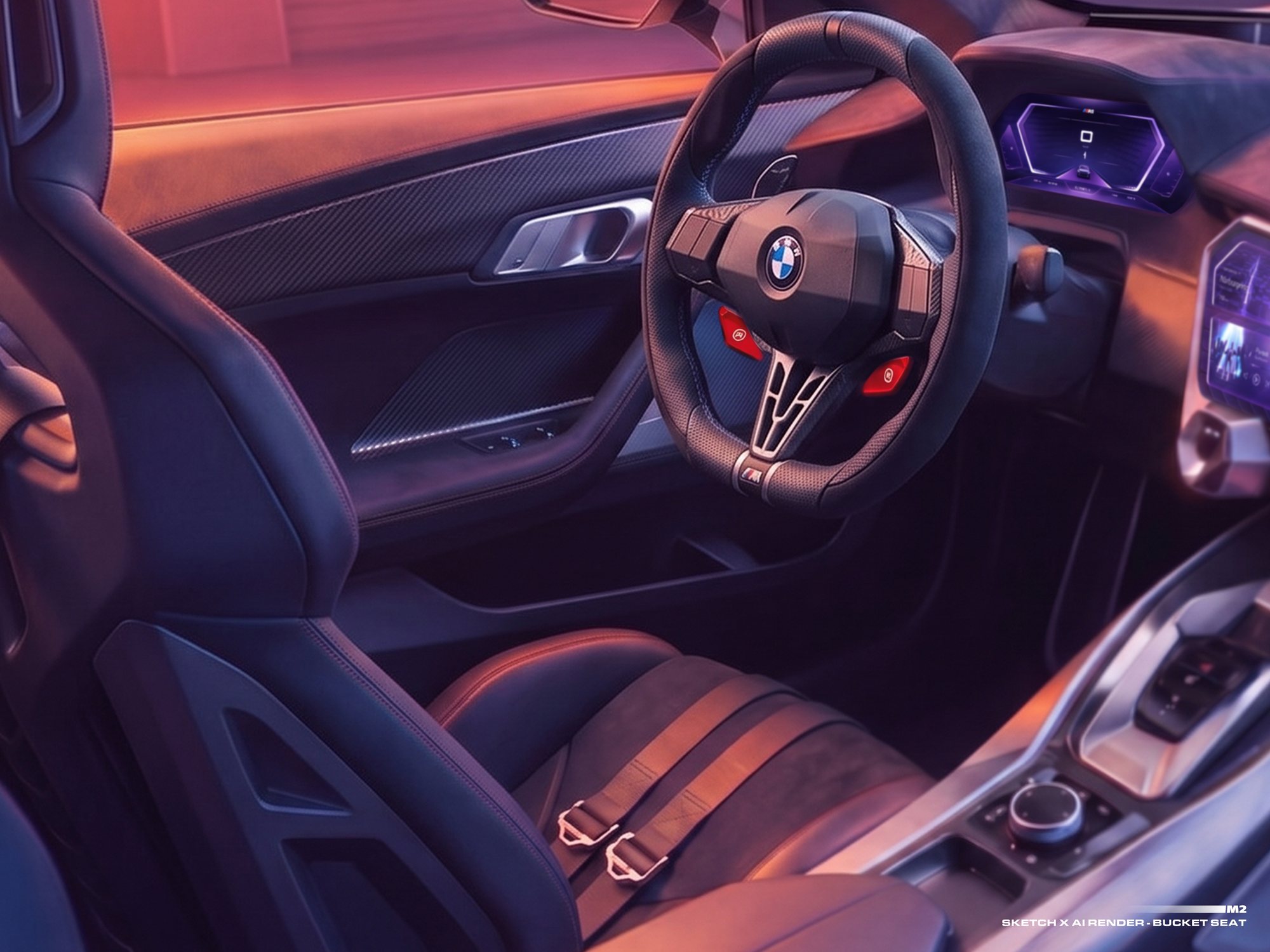 Sketch × AI render
Three surfaces, one hierarchy. Behind the wheel, the essentials only: speed, gear, torque and power, range, the drive mode and the DSC state, in a hexagonal frame that echoes the grille. Above it, the slice of the panoramic screen works as a head-up display: the next turn, the greeting, the time to arrival, the contextual alerts. To the right, the contextual layer for driver and passenger: destination and navigation, media, the car's status, climate. Designed in Figma, in the cabin's own language: deep, dark, lit in purple.
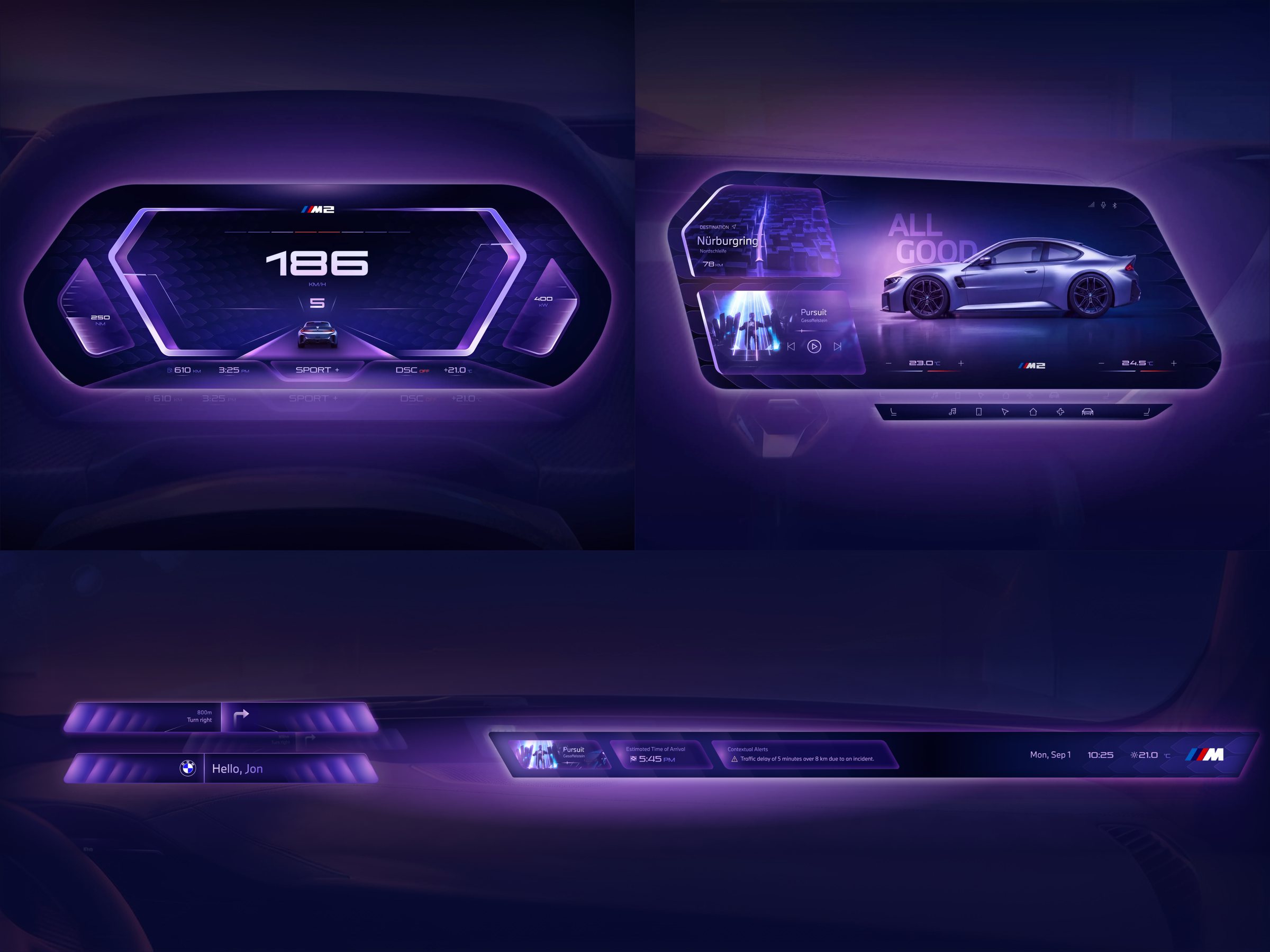 Figma · HMI design
Instrument cluster, panoramic display and the head-up strip above the wheel, designed in Figma.
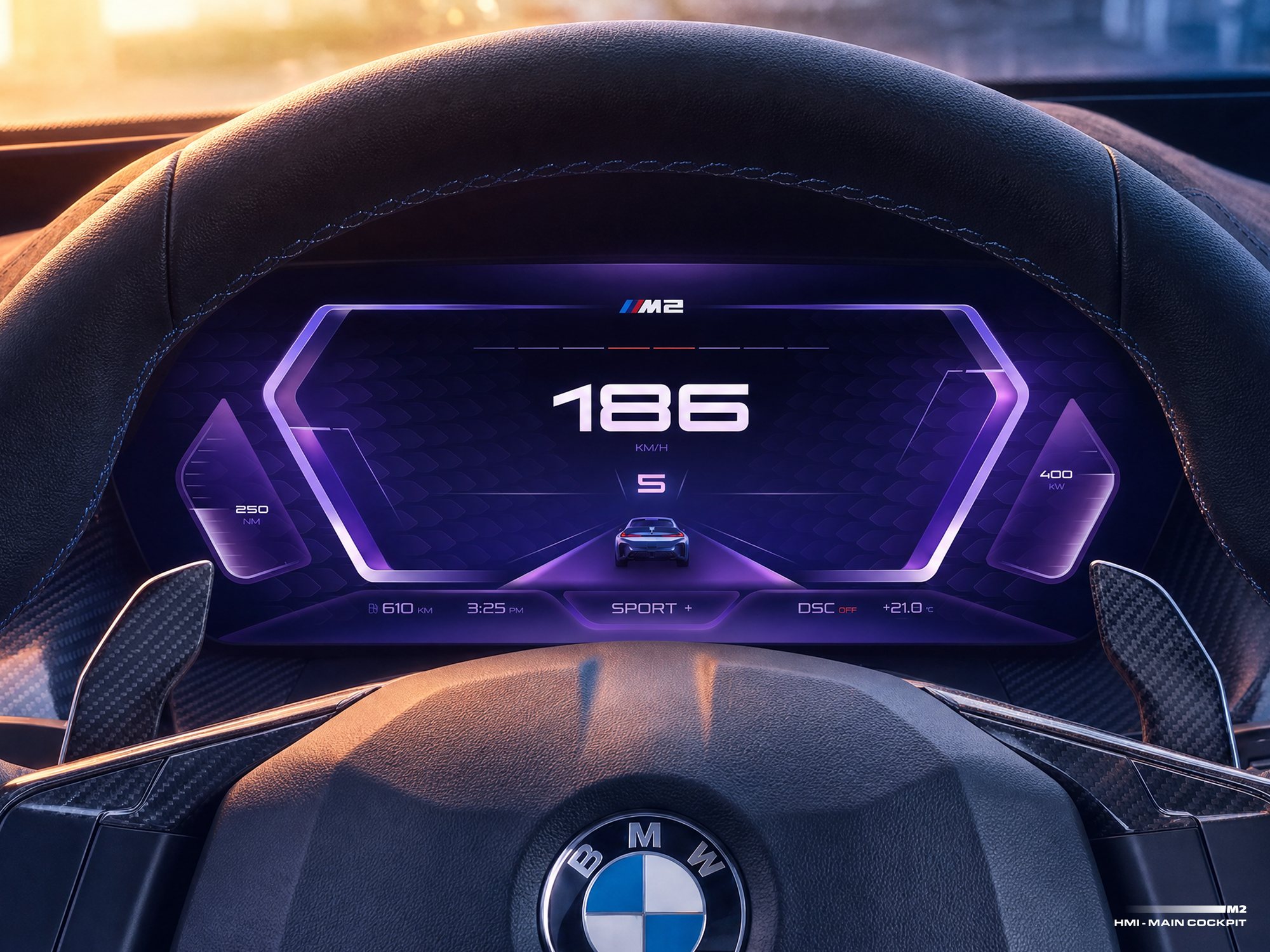 In situ · Main cockpit
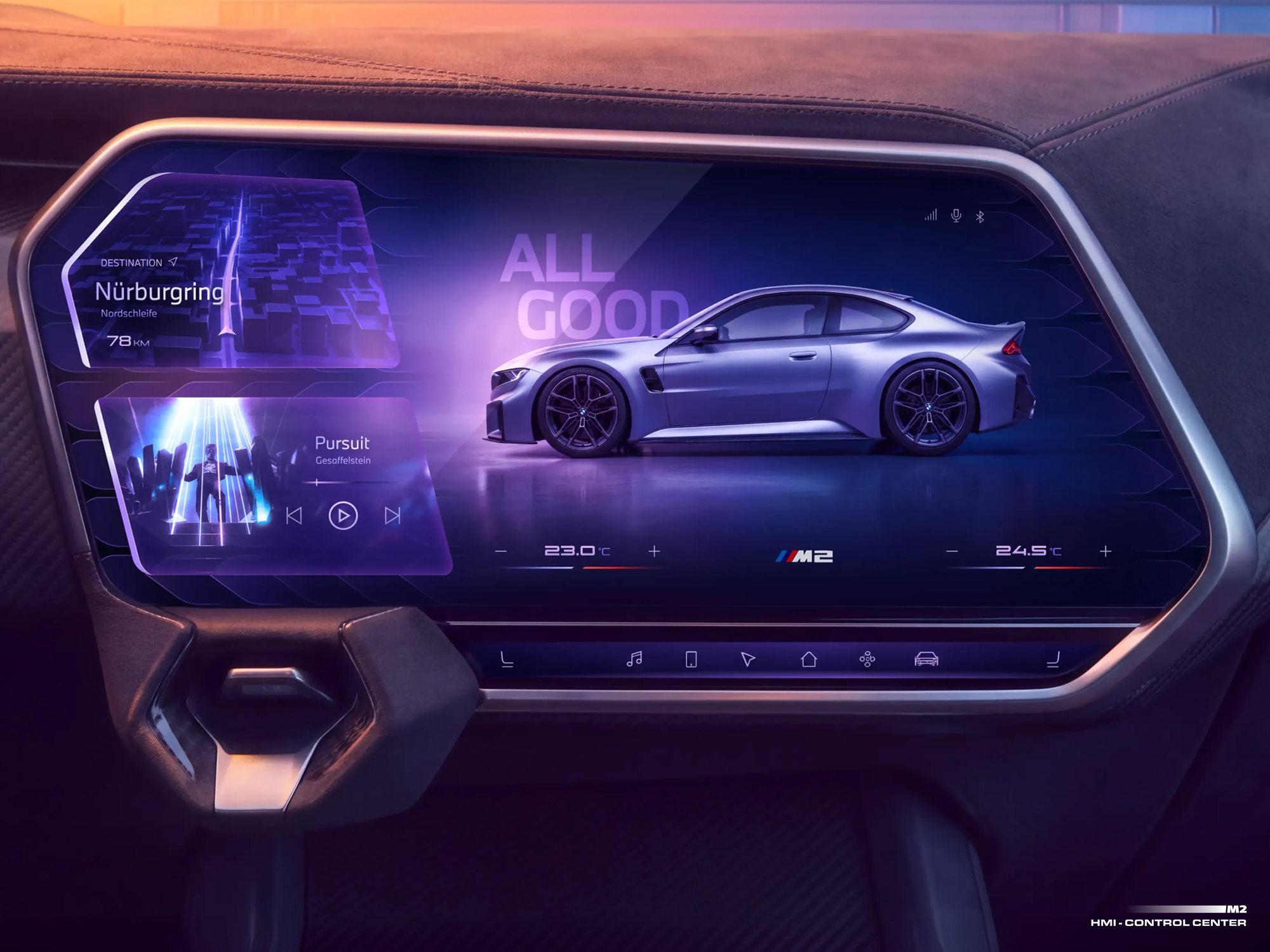 In situ · Control center
The screens in the cabin: the cluster framed by the wheel, the control center turned towards the driver.
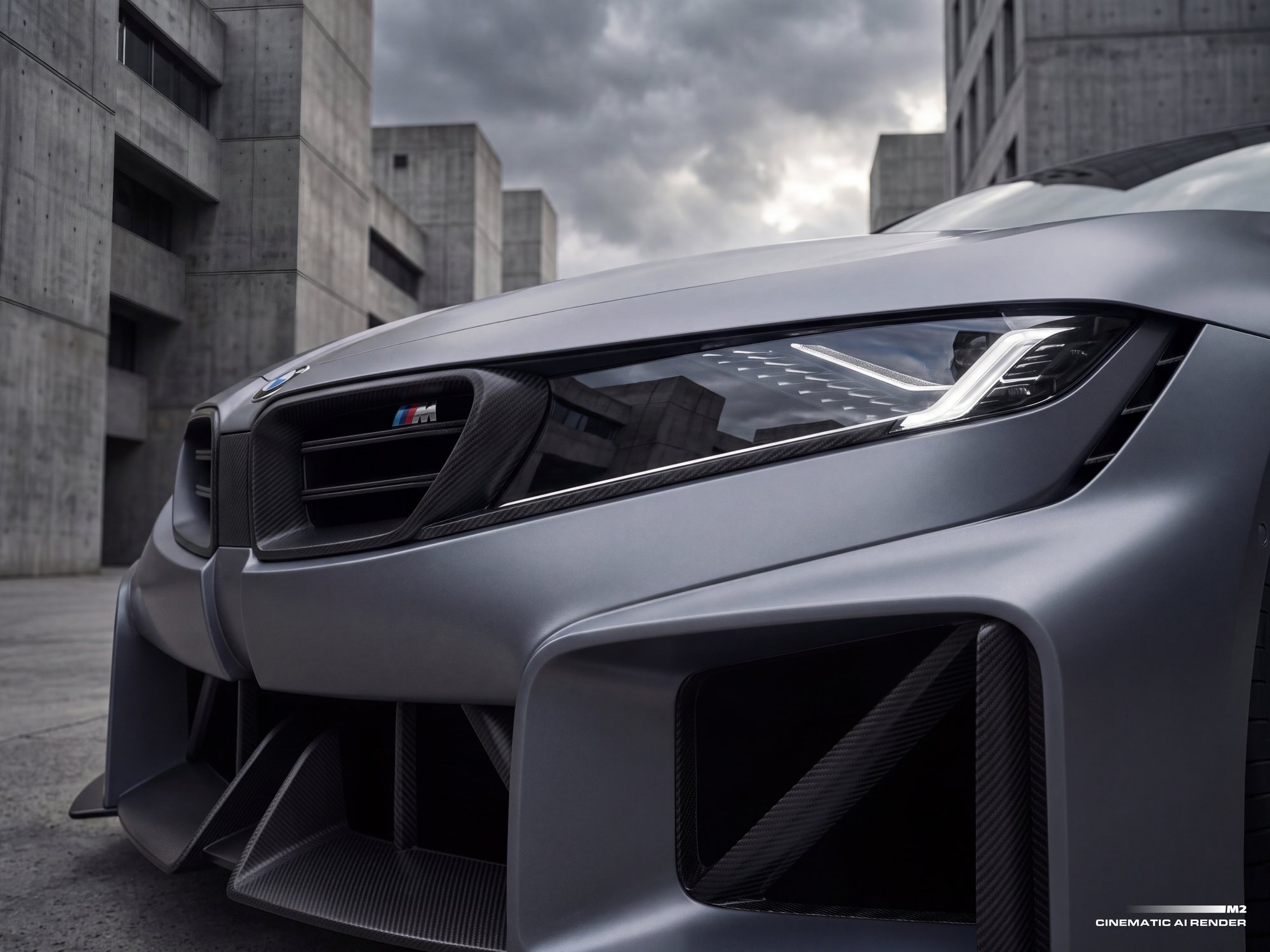
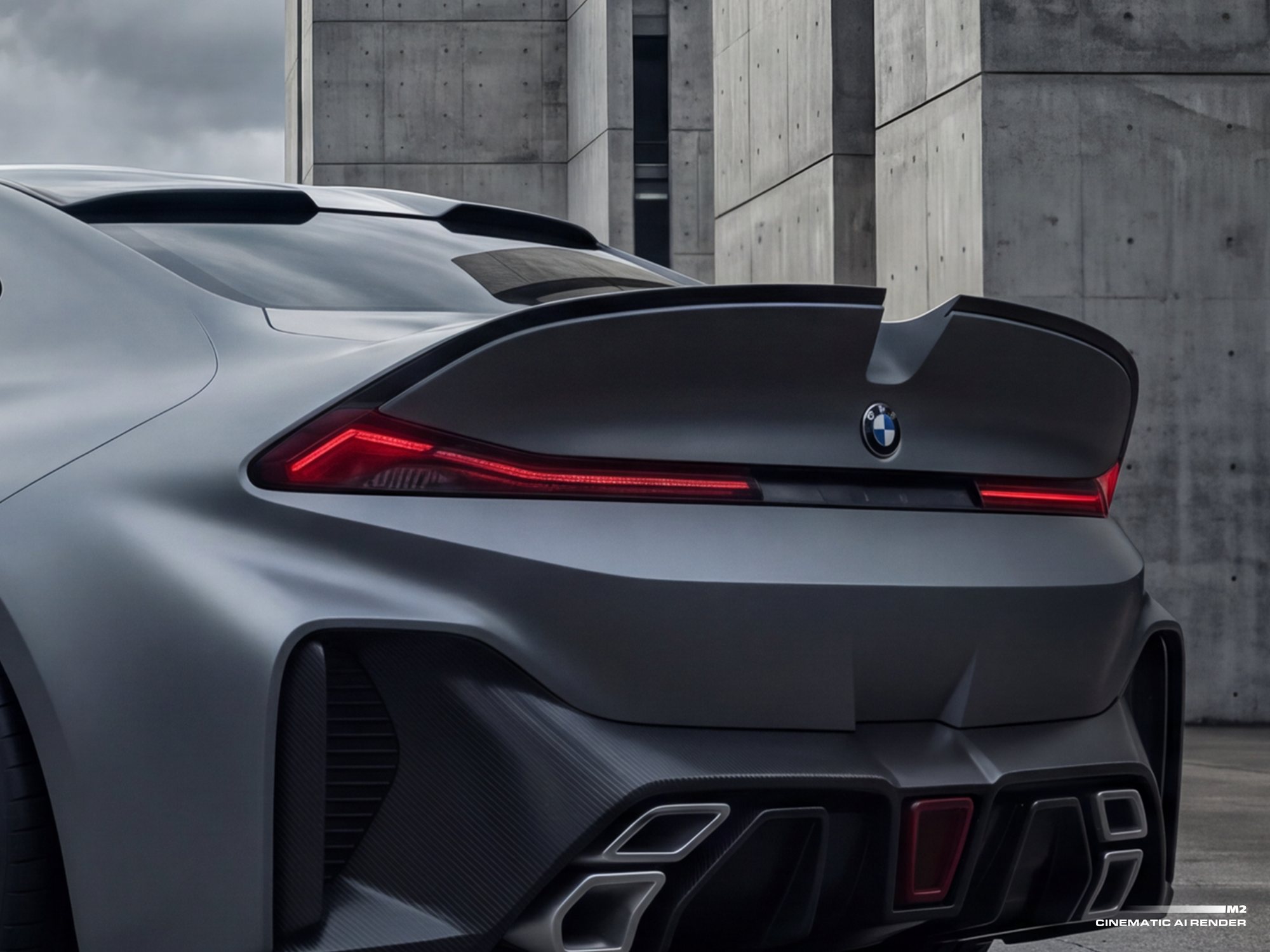
Four cinematic AI renders built on the final sketch: raw concrete, wet ground, storm light. The design is the sketch's, the atmosphere is the render's.
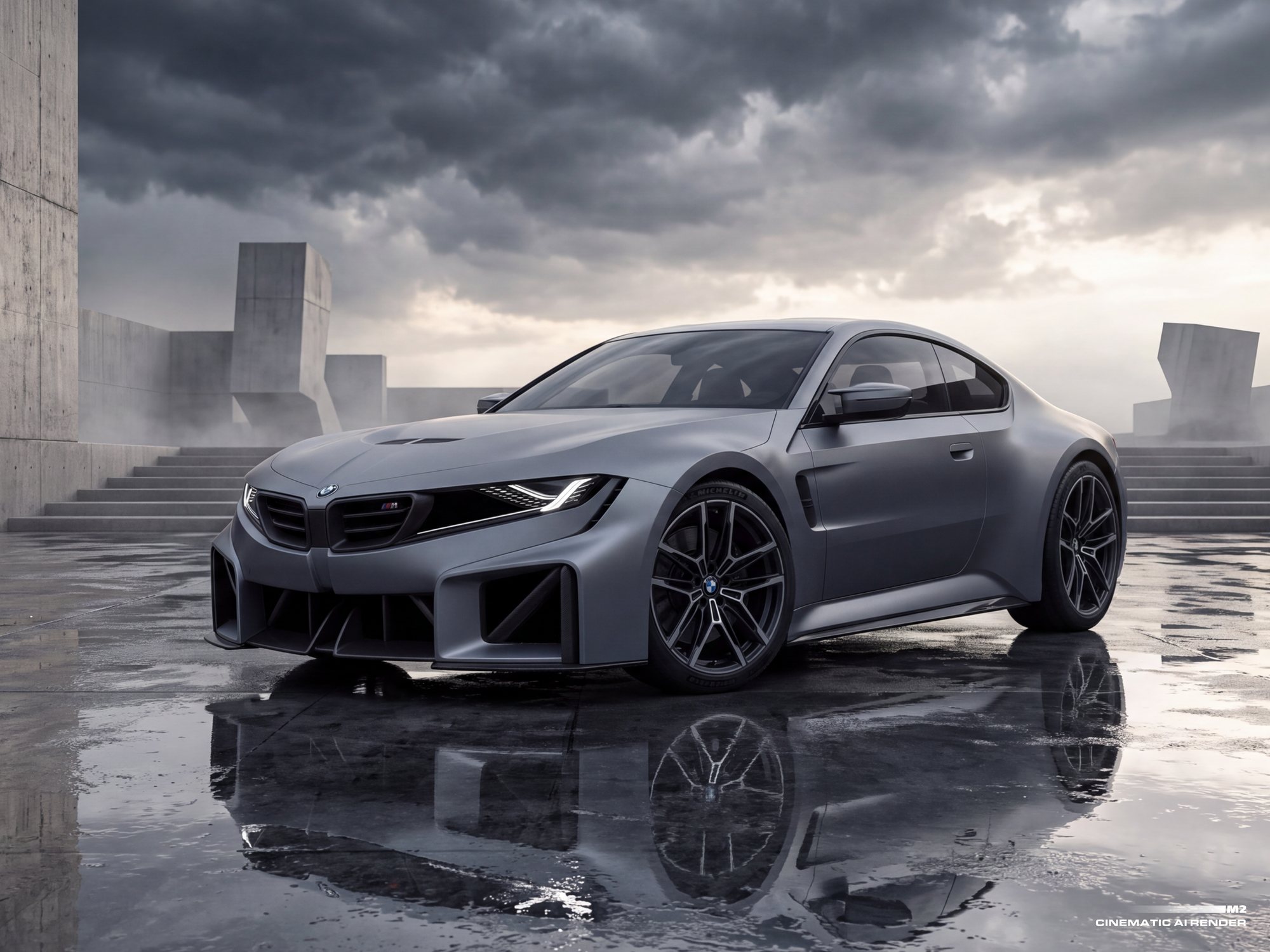 Cinematic AI render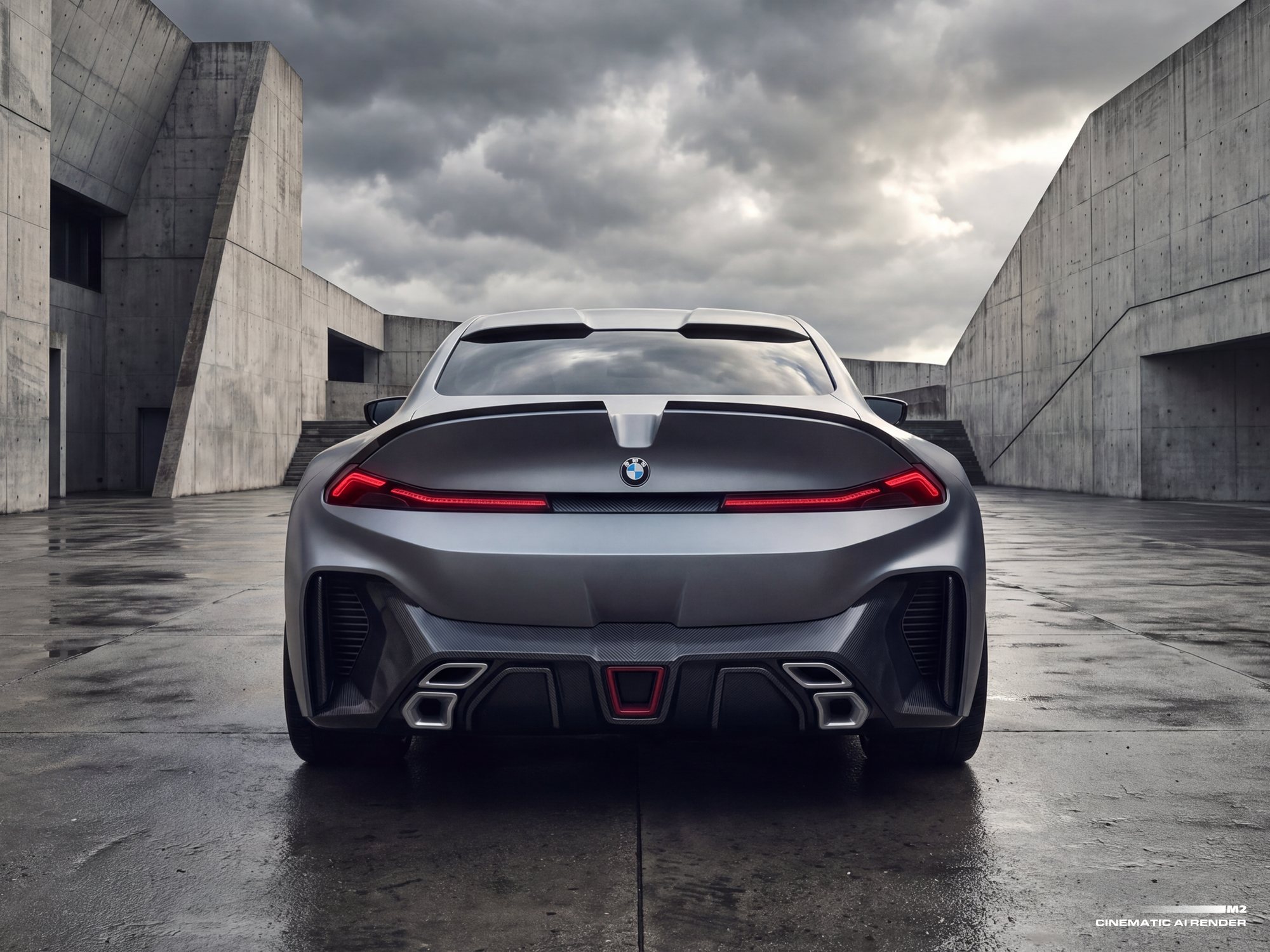
Raw power, drawn by hand. The next M2.
Personal exploration. Not affiliated with, or endorsed by, BMW.
Back to all work